
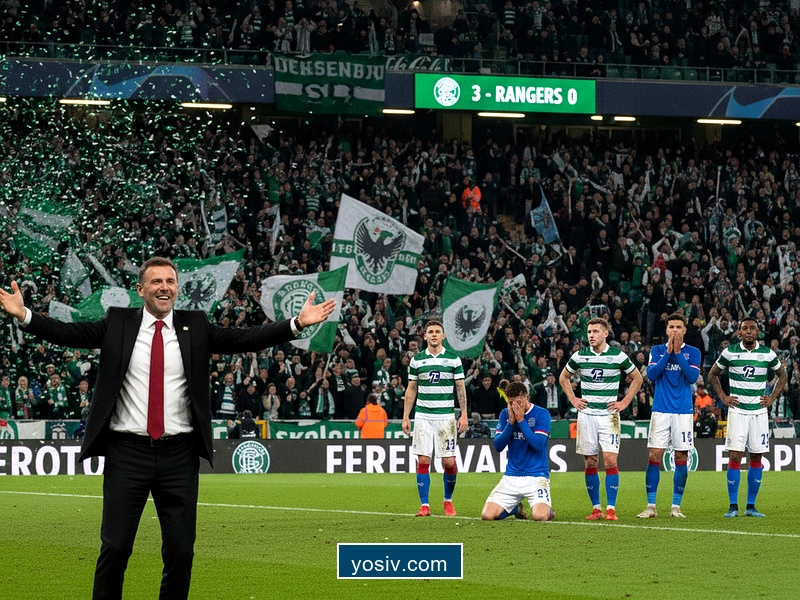
Less than thirty months ago, the streets of Seville were washed in blue, vibrating with the energy of a fanbase that believed their club had reclaimed its place among the continental elite. Fast forward to a cold, damp evening in Budapest, and that memory feels less like recent history and more like a cruel hallucination. The descent from Europa League finalists to the whipping boys of Groupama Arena has been steep, rapid, and, quite frankly, expensive.
When Robbie Keane speaks about Rangers, you expect a degree of rivalry-fueled bias. The man is, after all, a Celtic icon. But when the current Ferencvaros boss stood post-match and declared this Rangers side "as bad as I've seen," the sting didn't come from the malice—it came from the accuracy. This wasn’t just a bad night at the office for Philippe Clement’s men; it was a structural failure that has been years in the making.
The Anatomy of a Collapse
Let’s strip away the emotion and look at the market realities. In the corridors of European football, reputation is currency, and right now, the Rangers brand is experiencing a hyper-inflationary crash. Keane didn't just beat Rangers; he outmaneuvered them with a squad assembled on a fraction of the budget utilized at Ibrox. That is the detail that will keep the board awake at night.
The performance in Budapest wasn't merely a tactical defeat; it was an indictment of the recruitment strategy over the last four windows. We are looking at a squad that is bloated with wages yet starved of value. When you analyze the player trading model, Rangers are currently sitting on depreciating assets. The players brought in to bridge the gap to Celtic domestically and compete in Europe are doing neither.
"Rangers were comfortably second-best... as bad as I've seen." — Robbie Keane
Keane’s words are not just locker room fodder; they are a signal to the rest of the competition. He essentially told the continent that Rangers are soft. They are easy to press, easy to bypass in midfield, and fragile when the tempo increases. For a club that prides itself on aggression and resilience, that is the ultimate insult.
Inside the Dressing Room: A Void of Leadership
The Clement Question
Sources close to the camp have indicated for weeks that the atmosphere at Auchenhowie is strained. Philippe Clement arrived with an aura of strict discipline and tactical rigour, but that message seems to be hitting a wall. When a manager constantly rotates personnel not out of strategy, but out of a desperate search for someone—anyone—who can perform, it breeds instability.
The players looked lost against Ferencvaros. There was no coherent pressing trigger, no outlet ball, and terrifyingly little communication between the lines. This points to a deeper malaise than simple fatigue. It suggests a group of individuals who have stopped buying what the manager is selling. In this business, once you lose the ear of the dressing room, the severance package negotiations usually follow shortly after.
- Tactical Naivety: The midfield gap allowed Ferencvaros to transition without resistance.
- Recruitment Failures: High-wage signings were largely invisible during the match.
- Coefficient Damage: Every loss erodes Scotland's standing, making future qualification harder and revenue streams tighter.
The Financial Precipice
We need to talk about the bottom line. The implications of being "second-best" in the Europa League are severe. This isn't just about pride; it's about the balance sheet. Rangers operate on a model that requires European revenue to service their wage bill. When you are getting turned over by teams from leagues with a fraction of your TV deal, the return on investment (ROI) drops to catastrophic levels.
Investors and stakeholders look at performances like this and see risk. The January window is approaching, and the chatter among agents is that Rangers are in a bind. They need to sell to buy, but who is buying these underperforming players at book value? No one. The club is potentially stuck with deadwood that they can't shift, limiting their ability to bring in the quality required to salvage the season.
The Celtic Chasm
Perhaps the most painful aspect for the Ibrox faithful is the contrast with their neighbors. While Celtic are stacking cash reserves and operating with a clear, albeit sometimes frustratingly prudent, strategy, Rangers appear to be gambling and losing. Keane’s delight in the victory wasn't just about winning a football match; it was a symbolic twisting of the knife from the other side of Glasgow.
What Happens Next?
This defeat acts as a litmus test for the boardroom. Do they stick or twist? The "project" under Clement was supposed to be long-term, a gradual rebuild of the squad profile. But football is an impatient industry. If the
Less than thirty months ago, the streets of Seville were washed in blue, vibrating with the energy of a fanbase that believed their club had reclaimed its place among the continental elite. Fast forward to a cold, damp evening in Budapest, and that memory feels less like recent history and more like a cruel hallucination. The descent from Europa League finalists to the whipping boys of Groupama Arena has been steep, rapid, and, quite frankly, expensive.
When Robbie Keane speaks about Rangers, you expect a degree of rivalry-fueled bias. The man is, after all, a Celtic icon. But when the current Ferencvaros boss stood post-match and declared this Rangers side "as bad as I've seen," the sting didn't come from the malice—it came from the accuracy. This wasn’t just a bad night at the office for Philippe Clement’s men; it was a structural failure that has been years in the making.
The Anatomy of a Collapse
Let’s strip away the emotion and look at the market realities. In the corridors of European football, reputation is currency, and right now, the Rangers brand is experiencing a hyper-inflationary crash. Keane didn't just beat Rangers; he outmaneuvered them with a squad assembled on a fraction of the budget utilized at Ibrox. That is the detail that will keep the board awake at night.
The performance in Budapest wasn't merely a tactical defeat; it was an indictment of the recruitment strategy over the last four windows. We are looking at a squad that is bloated with wages yet starved of value. When you analyze the player trading model, Rangers are currently sitting on depreciating assets. The players brought in to bridge the gap to Celtic domestically and compete in Europe are doing neither.
"Rangers were comfortably second-best... as bad as I've seen." — Robbie Keane
Keane’s words are not just locker room fodder; they are a signal to the rest of the competition. He essentially told the continent that Rangers are soft. They are easy to press, easy to bypass in midfield, and fragile when the tempo increases. For a club that prides itself on aggression and resilience, that is the ultimate insult.
Inside the Dressing Room: A Void of Leadership
The Clement Question
Sources close to the camp have indicated for weeks that the atmosphere at Auchenhowie is strained. Philippe Clement arrived with an aura of strict discipline and tactical rigour, but that message seems to be hitting a wall. When a manager constantly rotates personnel not out of strategy, but out of a desperate search for someone—anyone—who can perform, it breeds instability.
The players looked lost against Ferencvaros. There was no coherent pressing trigger, no outlet ball, and terrifyingly little communication between the lines. This points to a deeper malaise than simple fatigue. It suggests a group of individuals who have stopped buying what the manager is selling. In this business, once you lose the ear of the dressing room, the severance package negotiations usually follow shortly after.
- Tactical Naivety: The midfield gap allowed Ferencvaros to transition without resistance.
- Recruitment Failures: High-wage signings were largely invisible during the match.
- Coefficient Damage: Every loss erodes Scotland's standing, making future qualification harder and revenue streams tighter.
The Financial Precipice
We need to talk about the bottom line. The implications of being "second-best" in the Europa League are severe. This isn't just about pride; it's about the balance sheet. Rangers operate on a model that requires European revenue to service their wage bill. When you are getting turned over by teams from leagues with a fraction of your TV deal, the return on investment (ROI) drops to catastrophic levels.
Investors and stakeholders look at performances like this and see risk. The January window is approaching, and the chatter among agents is that Rangers are in a bind. They need to sell to buy, but who is buying these underperforming players at book value? No one. The club is potentially stuck with deadwood that they can't shift, limiting their ability to bring in the quality required to salvage the season.
The Celtic Chasm
Perhaps the most painful aspect for the Ibrox faithful is the contrast with their neighbors. While Celtic are stacking cash reserves and operating with a clear, albeit sometimes frustratingly prudent, strategy, Rangers appear to be gambling and losing. Keane’s delight in the victory wasn't just about winning a football match; it was a symbolic twisting of the knife from the other side of Glasgow.
What Happens Next?
This defeat acts as a litmus test for the boardroom. Do they stick or twist? The "project" under Clement was supposed to be long-term, a gradual rebuild of the squad profile. But football is an impatient industry. If the