
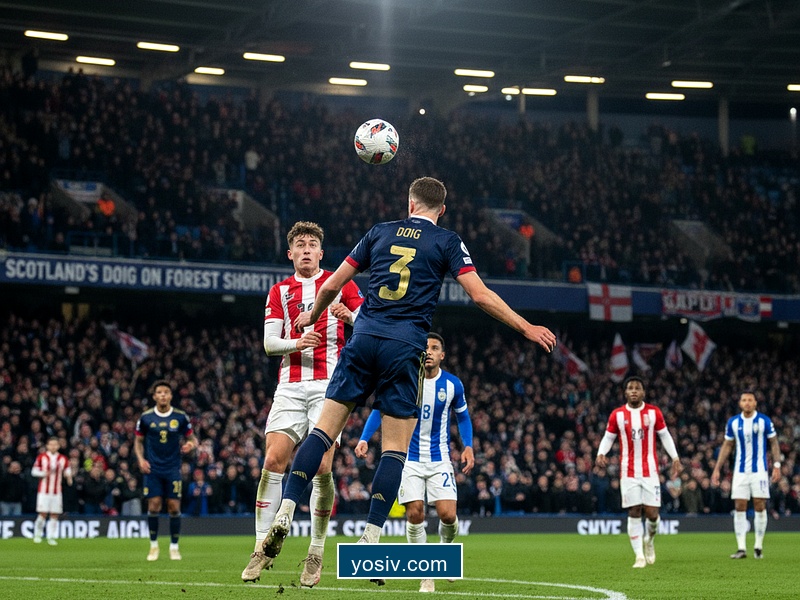
Is the transition from the tactical rigidity of Serie A to the chaotic physicality of the Premier League the ultimate litmus test for a modern fullback, or is it a calculated risk that data departments are increasingly willing to take?
The transfer market is rarely just about buying players; it is about acquiring solutions to specific systemic problems. When reports emerge linking Nottingham Forest with Scotland’s Josh Doig, currently plying his trade at Sassuolo, we aren't just seeing a rumor. We are witnessing a search for structural balance. Simultaneously, the murmurs surrounding Rangers midfielder Nicolas Raskin and the dynamic Djeidi Gassama suggest a broader shifting of assets that goes beyond simple squad depth.
The Nuno Espirito Santo Blueprint
To understand the interest in Josh Doig, you have to first deconstruct the requirements of a Nuno Espirito Santo side. Nuno has historically favored a system that demands extreme verticality from his wide defenders. Whether operating in a back four or a back five, the fullback in his system acts as the primary outlet for alleviating pressure.
Forest have utilized Ola Aina and Harry Toffolo, yet the left side remains an area ripe for optimization. Doig represents a specific profile: the high-volume carrier. Having graduated from the Hibernian academy before refining his defensive positioning in Italy with Verona and Sassuolo, Doig offers a hybrid skill set that is highly coveted.
"In the modern Premier League, a fullback cannot simply be a defender. They must be a playmaker on the touchline and a winger in the final third. The data suggests Doig is evolving into exactly that."
The allure of the Serie A education cannot be overstated. We have seen with players like Aaron Hickey and Destiny Udogie that young defenders returning or arriving from Italy bring a tactical discipline that often takes years to teach domestically. They understand cover shadows, passing lanes, and the trigger points for a press. For Forest, acquiring a 21-year-old with over 50 appearances in a top-five European league is not a gamble; it is an investment in geometric efficiency.
Analyzing the Metrics: Why Doig?
Let’s peel back the layers of the data. Why is Doig on the shortlist? It comes down to his ability to progress the ball. In a Forest team that often cedes possession to counter-attack, the ability to carry the ball 30 or 40 yards up the pitch solo is invaluable. It relieves the defensive block and allows the team to reset its shape.
- Progressive Carries: Doig consistently ranks highly for wide defenders in successful dribbles into the final third.
- Recovery Pace: His athletic profile allows him to participate in high transitions without leaving the back door open—a non-negotiable in the Premier League.
- Aerial Duels: Standing at over 6ft, he offers set-piece security that smaller fullbacks cannot provide.
This is not about signing a superstar; it is about Moneyball. Forest needs an asset that will appreciate in value while stabilizing the left flank. Doig fits that algorithm perfectly.
The Ibrox Equation: Raskin and Gassama
While Forest looks to shore up their defense, the noise surrounding Rangers suggests a potential reshaping of their midfield engine. The links regarding Nicolas Raskin and Djeidi Gassama paint a picture of a club in a state of flux, balancing the need for retention with the reality of market forces.
The Raskin Dilemma
Nicolas Raskin arrived at Ibrox as the solution to a stagnant midfield. He is a disruptor—a player who breaks up play and recycles possession. However, under Philippe Clement, the demand on the number 6 and 8 roles has shifted towards more vertical progression. If clubs are eyeing Raskin, it suggests that data analysts across Europe see an undervalued asset.
Raskin’s numbers for interceptions and tackles per 90 remain elite. Yet, if a substantial offer arrives, Rangers must ask themselves: is he essential to the new system, or is he a saleable asset that funds a rebuild? In the current financial climate of Scottish football, every player has a price tag if the ROI (Return on Investment) makes sense.
The Gassama Factor
Then there is the mention of Djeidi Gassama. The Sheffield Wednesday winger has often been linked with moves north of the border, creating a narrative intrigue. Gassama is the antithesis of control; he is chaos. His game is built on high-risk dribbling and explosive bursts.
If Rangers—or any other suitor—are looking at Gassama, it signals a desire to break down low blocks through individual brilliance rather than structured passing. It is a tactical pivot. Comparing the steady control of Raskin to the explosive unpredictability of Gassama highlights the divergent paths clubs can take in the transfer window: do you buy stability, or do you buy the X-factor?
The Verdict: Strategic Movements
The link between Nottingham Forest and Josh Doig is more than gossip; it is a logical conclusion derived from squad analysis. Forest requires a left-sided dynamic that Doig has proven he can provide in one of the world's most defensive leagues.
Meanwhile, the situation at Rangers serves as a reminder that every player in the squad is a moveable piece on the tactical board. Whether Raskin stays to anchor the midfield or is sold to fund new targets like Gassama, the decision will be driven by the system Clement wishes to deploy. In the high-stakes world of football recruitment, sentiment rarely survives the scrutiny of the spreadsheet.
Is the transition from the tactical rigidity of Serie A to the chaotic physicality of the Premier League the ultimate litmus test for a modern fullback, or is it a calculated risk that data departments are increasingly willing to take?
The transfer market is rarely just about buying players; it is about acquiring solutions to specific systemic problems. When reports emerge linking Nottingham Forest with Scotland’s Josh Doig, currently plying his trade at Sassuolo, we aren't just seeing a rumor. We are witnessing a search for structural balance. Simultaneously, the murmurs surrounding Rangers midfielder Nicolas Raskin and the dynamic Djeidi Gassama suggest a broader shifting of assets that goes beyond simple squad depth.
The Nuno Espirito Santo Blueprint
To understand the interest in Josh Doig, you have to first deconstruct the requirements of a Nuno Espirito Santo side. Nuno has historically favored a system that demands extreme verticality from his wide defenders. Whether operating in a back four or a back five, the fullback in his system acts as the primary outlet for alleviating pressure.
Forest have utilized Ola Aina and Harry Toffolo, yet the left side remains an area ripe for optimization. Doig represents a specific profile: the high-volume carrier. Having graduated from the Hibernian academy before refining his defensive positioning in Italy with Verona and Sassuolo, Doig offers a hybrid skill set that is highly coveted.
"In the modern Premier League, a fullback cannot simply be a defender. They must be a playmaker on the touchline and a winger in the final third. The data suggests Doig is evolving into exactly that."
The allure of the Serie A education cannot be overstated. We have seen with players like Aaron Hickey and Destiny Udogie that young defenders returning or arriving from Italy bring a tactical discipline that often takes years to teach domestically. They understand cover shadows, passing lanes, and the trigger points for a press. For Forest, acquiring a 21-year-old with over 50 appearances in a top-five European league is not a gamble; it is an investment in geometric efficiency.
Analyzing the Metrics: Why Doig?
Let’s peel back the layers of the data. Why is Doig on the shortlist? It comes down to his ability to progress the ball. In a Forest team that often cedes possession to counter-attack, the ability to carry the ball 30 or 40 yards up the pitch solo is invaluable. It relieves the defensive block and allows the team to reset its shape.
- Progressive Carries: Doig consistently ranks highly for wide defenders in successful dribbles into the final third.
- Recovery Pace: His athletic profile allows him to participate in high transitions without leaving the back door open—a non-negotiable in the Premier League.
- Aerial Duels: Standing at over 6ft, he offers set-piece security that smaller fullbacks cannot provide.
This is not about signing a superstar; it is about Moneyball. Forest needs an asset that will appreciate in value while stabilizing the left flank. Doig fits that algorithm perfectly.
The Ibrox Equation: Raskin and Gassama
While Forest looks to shore up their defense, the noise surrounding Rangers suggests a potential reshaping of their midfield engine. The links regarding Nicolas Raskin and Djeidi Gassama paint a picture of a club in a state of flux, balancing the need for retention with the reality of market forces.
The Raskin Dilemma
Nicolas Raskin arrived at Ibrox as the solution to a stagnant midfield. He is a disruptor—a player who breaks up play and recycles possession. However, under Philippe Clement, the demand on the number 6 and 8 roles has shifted towards more vertical progression. If clubs are eyeing Raskin, it suggests that data analysts across Europe see an undervalued asset.
Raskin’s numbers for interceptions and tackles per 90 remain elite. Yet, if a substantial offer arrives, Rangers must ask themselves: is he essential to the new system, or is he a saleable asset that funds a rebuild? In the current financial climate of Scottish football, every player has a price tag if the ROI (Return on Investment) makes sense.
The Gassama Factor
Then there is the mention of Djeidi Gassama. The Sheffield Wednesday winger has often been linked with moves north of the border, creating a narrative intrigue. Gassama is the antithesis of control; he is chaos. His game is built on high-risk dribbling and explosive bursts.
If Rangers—or any other suitor—are looking at Gassama, it signals a desire to break down low blocks through individual brilliance rather than structured passing. It is a tactical pivot. Comparing the steady control of Raskin to the explosive unpredictability of Gassama highlights the divergent paths clubs can take in the transfer window: do you buy stability, or do you buy the X-factor?
The Verdict: Strategic Movements
The link between Nottingham Forest and Josh Doig is more than gossip; it is a logical conclusion derived from squad analysis. Forest requires a left-sided dynamic that Doig has proven he can provide in one of the world's most defensive leagues.
Meanwhile, the situation at Rangers serves as a reminder that every player in the squad is a moveable piece on the tactical board. Whether Raskin stays to anchor the midfield or is sold to fund new targets like Gassama, the decision will be driven by the system Clement wishes to deploy. In the high-stakes world of football recruitment, sentiment rarely survives the scrutiny of the spreadsheet.