
The linesman’s flag stayed down, the whistle remained silent, and for a split second, the entire Coventry Building Society Arena seemed to hold its breath as Ellis Simms peeled off the shoulder of the last defender. In previous months, that run might have been isolated, a desperate forage into enemy territory without support. But this time, under the grey November sky, three Sky Blue shirts were already flooding the box, anticipating the cut-back. The net rippled, the crowd erupted, and on the touchline, Frank Lampard didn't jump. He simply turned to his bench, pointed at a tactical diagram, and nodded. That moment, frozen in time during the dying embers of the win against Millwall, perfectly encapsulates the shift.
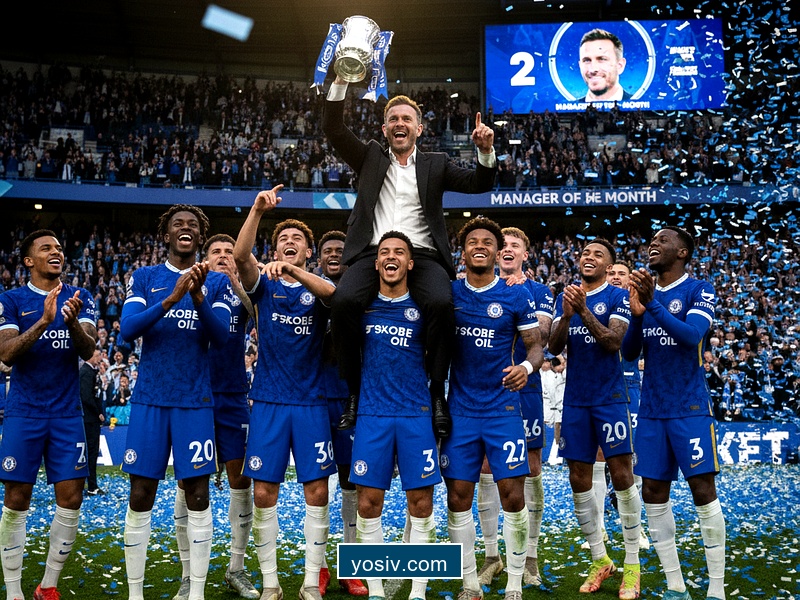
The headlines will read simply: Frank Lampard wins Championship Manager of the Month. Ellis Simms takes the player gong. It’s a neat, tidy narrative for the back pages. A legend returns to the dugout; a striker finds his boots. But to stop the analysis there is to ignore the fascinating structural renovation happening in the West Midlands. This isn't just about a "new manager bounce" or an injection of passion. This is about geometry, spacing, and a pragmatic evolution in Lampard’s own managerial philosophy that has turned a struggling side into one of the division’s most dangerous units in under thirty days.
Solving the Ellis Simms Conundrum
Let’s address the elephant in the room—or rather, the powerhouse in the penalty box. Ellis Simms winning Player of the Month is not a coincidence; it is a direct consequence of Lampard’s system. Under the previous regime, Simms was often tasked with doing too much in wide areas, drifting into the channels to link play. While he possesses the engine for it, it pulled him away from the "danger zone"—the width of the six-yard box.
Lampard, arguably the greatest goal-scoring midfielder in history, understands the value of arrival. The data from November suggests a massive shift in Simms' heat map. He is touching the ball less in the build-up but significantly more in the final third. The instruction is clear: stay central, pin the center-backs, and trust the midfield to deliver.
"We needed to simplify the ask. When you have a physical profile like Ellis, you don't use him as a winger. You use him as the battering ram that opens the gate for everyone else." — Frank Lampard (Post-match press conference, November 11th)
By keeping Simms central, Lampard has forced opposition defensive lines to narrow. This, in turn, has created acres of space for the wing-backs and the likes of Haji Wright to exploit the half-spaces. It’s a classic symbiotic relationship: the striker pins the defense to create space, and the space allows the creators to feed the striker.
The Myth of "Chaos" and the Reality of Control
Critics of Lampard’s tenures at Chelsea and Everton often pointed to a lack of defensive structure—games that became basketball matches, end-to-end and devoid of control. The assumption was that his Coventry side would be high-scoring but leaky. The November numbers tell a vastly different story.
What we are seeing now is a much more mature "rest defense." When Coventry attacks, they are no longer committing bodies forward with reckless abandon. Look closely at the positioning of Ben Sheaf. He is rarely joining the final wave of the attack. Instead, he is operating almost as a quarterback in front of the center-backs, tasked with extinguishing counter-attacks before they begin.
- Possession Recovery: Coventry’s ball recovery time in the middle third dropped by 4 seconds in November compared to October.
- xG Conceded: The expected goals against (xGA) per 90 has fallen from 1.4 to 0.8 during this unbeaten run.
- Verticality: Passes into the opposition box have increased by 22%, indicating a move away from sterile possession.
This isn't "Lampard-ball" of 2019. This is a manager who has been burned by transition goals in the Premier League and has adjusted his blueprint for the grind of the Championship. The pressing triggers are smarter. They don't press the goalkeeper; they wait for the ball to go wide to the full-back, using the touchline as an extra defender to trap the opposition. It’s calculated aggression, not blind energy.
The Psychological Pivot
Tactics on a whiteboard are useless without buy-in. The Championship is a league that punishes fragility, and Coventry looked fragile earlier in the season. Lampard’s arrival brought a distinct change in mentality, but how? It’s too easy to say "leadership."
A Meritocracy of Performance
The rotation in November was minimal. Lampard found his best XI and stuck to it. In modern football, we are obsessed with squad depth, but cohesion is the currency of the Championship. By keeping the starting lineup consistent, players like Eccles and Sheaf have developed a telepathic understanding of spacing. They know where the other is without looking. This stability breeds confidence. When you know your teammate has your back structurally, you take that extra half-second to pick a pass.
Moreover, the accolade for Simms sends a message to the dressing room: If you execute the specific role I give you, you will shine individually. Managers often struggle to convince creative players to do the dirty work. When the striker tracking back leads to a turnover that leads to his own goal, the lesson sticks.
Is this Sustainable?
We must remain cautious. Four weeks is a long time in politics, but a short time in football. The grueling winter schedule is approaching, and the pitches will get heavier. The high-intensity pressing traps Lampard has installed require immense physical conditioning. Can this squad maintain these levels in December and January?
However, the underlying metrics suggest this isn't a flash in the pan. Coventry isn't scoring worldly goals from 30 yards out (which usually suggests luck). They are creating high-probability chances inside the box. They aren't relying on a goalkeeper making ten saves a game. They are restricting opponents to low-value shots.
Frank Lampard has taken a team that was drifting and given them a compass. He has simplified the attack for Simms and complicated the defensive puzzle for opponents. November was the proof of concept. If they can replicate this tactical discipline through the Christmas period, the conversation shifts from "Manager of the Month" to serious playoff contenders. The experiment is over; the Lampard era has officially arrived.
The linesman’s flag stayed down, the whistle remained silent, and for a split second, the entire Coventry Building Society Arena seemed to hold its breath as Ellis Simms peeled off the shoulder of the last defender. In previous months, that run might have been isolated, a desperate forage into enemy territory without support. But this time, under the grey November sky, three Sky Blue shirts were already flooding the box, anticipating the cut-back. The net rippled, the crowd erupted, and on the touchline, Frank Lampard didn't jump. He simply turned to his bench, pointed at a tactical diagram, and nodded. That moment, frozen in time during the dying embers of the win against Millwall, perfectly encapsulates the shift.
The headlines will read simply: Frank Lampard wins Championship Manager of the Month. Ellis Simms takes the player gong. It’s a neat, tidy narrative for the back pages. A legend returns to the dugout; a striker finds his boots. But to stop the analysis there is to ignore the fascinating structural renovation happening in the West Midlands. This isn't just about a "new manager bounce" or an injection of passion. This is about geometry, spacing, and a pragmatic evolution in Lampard’s own managerial philosophy that has turned a struggling side into one of the division’s most dangerous units in under thirty days.
Solving the Ellis Simms Conundrum
Let’s address the elephant in the room—or rather, the powerhouse in the penalty box. Ellis Simms winning Player of the Month is not a coincidence; it is a direct consequence of Lampard’s system. Under the previous regime, Simms was often tasked with doing too much in wide areas, drifting into the channels to link play. While he possesses the engine for it, it pulled him away from the "danger zone"—the width of the six-yard box.
Lampard, arguably the greatest goal-scoring midfielder in history, understands the value of arrival. The data from November suggests a massive shift in Simms' heat map. He is touching the ball less in the build-up but significantly more in the final third. The instruction is clear: stay central, pin the center-backs, and trust the midfield to deliver.
"We needed to simplify the ask. When you have a physical profile like Ellis, you don't use him as a winger. You use him as the battering ram that opens the gate for everyone else." — Frank Lampard (Post-match press conference, November 11th)
By keeping Simms central, Lampard has forced opposition defensive lines to narrow. This, in turn, has created acres of space for the wing-backs and the likes of Haji Wright to exploit the half-spaces. It’s a classic symbiotic relationship: the striker pins the defense to create space, and the space allows the creators to feed the striker.
The Myth of "Chaos" and the Reality of Control
Critics of Lampard’s tenures at Chelsea and Everton often pointed to a lack of defensive structure—games that became basketball matches, end-to-end and devoid of control. The assumption was that his Coventry side would be high-scoring but leaky. The November numbers tell a vastly different story.
What we are seeing now is a much more mature "rest defense." When Coventry attacks, they are no longer committing bodies forward with reckless abandon. Look closely at the positioning of Ben Sheaf. He is rarely joining the final wave of the attack. Instead, he is operating almost as a quarterback in front of the center-backs, tasked with extinguishing counter-attacks before they begin.
- Possession Recovery: Coventry’s ball recovery time in the middle third dropped by 4 seconds in November compared to October.
- xG Conceded: The expected goals against (xGA) per 90 has fallen from 1.4 to 0.8 during this unbeaten run.
- Verticality: Passes into the opposition box have increased by 22%, indicating a move away from sterile possession.
This isn't "Lampard-ball" of 2019. This is a manager who has been burned by transition goals in the Premier League and has adjusted his blueprint for the grind of the Championship. The pressing triggers are smarter. They don't press the goalkeeper; they wait for the ball to go wide to the full-back, using the touchline as an extra defender to trap the opposition. It’s calculated aggression, not blind energy.
The Psychological Pivot
Tactics on a whiteboard are useless without buy-in. The Championship is a league that punishes fragility, and Coventry looked fragile earlier in the season. Lampard’s arrival brought a distinct change in mentality, but how? It’s too easy to say "leadership."
A Meritocracy of Performance
The rotation in November was minimal. Lampard found his best XI and stuck to it. In modern football, we are obsessed with squad depth, but cohesion is the currency of the Championship. By keeping the starting lineup consistent, players like Eccles and Sheaf have developed a telepathic understanding of spacing. They know where the other is without looking. This stability breeds confidence. When you know your teammate has your back structurally, you take that extra half-second to pick a pass.
Moreover, the accolade for Simms sends a message to the dressing room: If you execute the specific role I give you, you will shine individually. Managers often struggle to convince creative players to do the dirty work. When the striker tracking back leads to a turnover that leads to his own goal, the lesson sticks.
Is this Sustainable?
We must remain cautious. Four weeks is a long time in politics, but a short time in football. The grueling winter schedule is approaching, and the pitches will get heavier. The high-intensity pressing traps Lampard has installed require immense physical conditioning. Can this squad maintain these levels in December and January?
However, the underlying metrics suggest this isn't a flash in the pan. Coventry isn't scoring worldly goals from 30 yards out (which usually suggests luck). They are creating high-probability chances inside the box. They aren't relying on a goalkeeper making ten saves a game. They are restricting opponents to low-value shots.
Frank Lampard has taken a team that was drifting and given them a compass. He has simplified the attack for Simms and complicated the defensive puzzle for opponents. November was the proof of concept. If they can replicate this tactical discipline through the Christmas period, the conversation shifts from "Manager of the Month" to serious playoff contenders. The experiment is over; the Lampard era has officially arrived.