
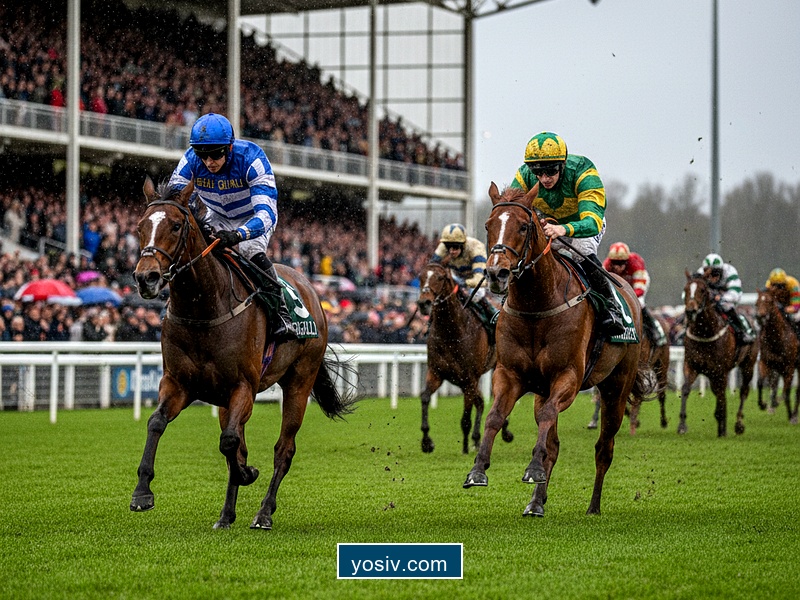
The Stat: 1.4 lengths. That is the cumulative margin of defeat across Beau Quali’s last three outings combined. Despite posting superior closing sectional times in two of those three races, the win column remains stubbornly empty. In a sport often defined by binary outcomes—win or lose—this metric screams of statistical variance rather than a fundamental lack of ability.
When the market analyzes a race card, it often overcorrects for recent form figures while ignoring the underlying performance data. This afternoon’s feature at Doncaster, broadcast live on Sky Sports Racing, presents a fascinating case study in this inefficiency. On the surface, we have a "luckless" runner facing off against the robust George's Lad. But dig deeper into the mechanics of the race, and the narrative shifts from one of bad luck to one of tactical probability.
Deconstructing the "Luckless" Narrative
"Unlucky" is a lazy term in sports analysis. It suggests forces beyond control. However, when you break down Beau Quali’s recent tape, what we are actually seeing is a recurring issue with energy distribution and traffic management. This is a horse that possesses a high cruising speed but has been frequently deployed in races where the pace collapsed, resulting in messy, tactical sprints.
"Variance is the enemy of the short-term bettor, but the friend of the long-term analyst. Beau Quali's underlying metrics suggest a horse running 10lbs better than his finishing positions imply."
The issue hasn't been the engine; it has been the navigation. In his last start, his path was blocked at the crucial two-furlong pole, forcing a check in momentum that cost him roughly 0.5 seconds—an eternity in a sprint finish. Today, the variables change. Doncaster is not a tight, turning track that exacerbates traffic issues. It is a wide, galloping expanse that rewards horses who can sustain a long, high-tempo run. This geometric shift immediately improves Beau Quali’s Expected Win (xW) probability.
The George's Lad Factor: Efficiency vs. Explosion
Opposing the favorite is George's Lad, a competitor who represents tactical efficiency. Unlike Beau Quali, who relies on a late burst of acceleration (high variance), George's Lad operates on a prominent racing style. He puts himself in the "golden zone"—sitting just off the pace, controlling his own destiny, and minimizing the risk of interference.
Why does this matter for today's match-up? It creates a classic tactical duality:
- The Grinder (George's Lad): Relies on a consistent gallop to burn off rivals. Needs the race to be a true test of stamina to prevent late closers from catching him.
- The Sniper (Beau Quali): Relies on a turn of foot. Needs a decent pace to aim at, but crucially needs clear air to unleash his stored kinetic energy.
The danger for George's Lad is that he becomes the "hare." By committing to a forward position early, he expends energy breaking the wind resistance for the pack. If the ground at Doncaster is riding remotely dead or sticky, that energy expenditure compounds in the final furlong, leaving him vulnerable to a stalker with preserved resources.
The Town Moor Topology: A Tactical Reset
Geography dictates strategy. Doncaster's Town Moor is one of the fairest tracks in the country, but its long, flat straight is a graveyard for horses that lack genuine stamina. It is essentially a drag strip for the final three furlongs.
The Impact of the Long Straight
This topography favors Beau Quali significantly more than the tighter tracks he has been frequenting. On a sharp track, a "luckless" run often happens because the window of opportunity to overtake is small—perhaps only 200 yards on a short straight. At Doncaster, that window expands. The jockey has time to balance the horse, switch lanes without panic, and wind up for a sustained challenge.
Furthermore, the "luckless" tag has likely depressed Beau Quali's price in the betting markets, creating what we call "recency bias value." The market sees the defeats; the analyst sees the closing speed figures.
Conclusion: The Regression to the Mean
In data analysis, regression to the mean is the phenomenon that if a variable is extreme on its first measurement, it will tend to be closer to the average on its second. Beau Quali's "bad luck" is an extreme variable. He is not a bad horse; he is a statistically anomalous one.
George's Lad provides a stern test. He is the benchmark of solidity. However, solidity often hits a ceiling. If the race unfolds with a genuine tempo—which the Doncaster layout encourages—the setup pivots toward the horse with the superior turn of foot.
We aren't just watching a horse rac
The Stat: 1.4 lengths. That is the cumulative margin of defeat across Beau Quali’s last three outings combined. Despite posting superior closing sectional times in two of those three races, the win column remains stubbornly empty. In a sport often defined by binary outcomes—win or lose—this metric screams of statistical variance rather than a fundamental lack of ability.
When the market analyzes a race card, it often overcorrects for recent form figures while ignoring the underlying performance data. This afternoon’s feature at Doncaster, broadcast live on Sky Sports Racing, presents a fascinating case study in this inefficiency. On the surface, we have a "luckless" runner facing off against the robust George's Lad. But dig deeper into the mechanics of the race, and the narrative shifts from one of bad luck to one of tactical probability.
Deconstructing the "Luckless" Narrative
"Unlucky" is a lazy term in sports analysis. It suggests forces beyond control. However, when you break down Beau Quali’s recent tape, what we are actually seeing is a recurring issue with energy distribution and traffic management. This is a horse that possesses a high cruising speed but has been frequently deployed in races where the pace collapsed, resulting in messy, tactical sprints.
"Variance is the enemy of the short-term bettor, but the friend of the long-term analyst. Beau Quali's underlying metrics suggest a horse running 10lbs better than his finishing positions imply."
The issue hasn't been the engine; it has been the navigation. In his last start, his path was blocked at the crucial two-furlong pole, forcing a check in momentum that cost him roughly 0.5 seconds—an eternity in a sprint finish. Today, the variables change. Doncaster is not a tight, turning track that exacerbates traffic issues. It is a wide, galloping expanse that rewards horses who can sustain a long, high-tempo run. This geometric shift immediately improves Beau Quali’s Expected Win (xW) probability.
The George's Lad Factor: Efficiency vs. Explosion
Opposing the favorite is George's Lad, a competitor who represents tactical efficiency. Unlike Beau Quali, who relies on a late burst of acceleration (high variance), George's Lad operates on a prominent racing style. He puts himself in the "golden zone"—sitting just off the pace, controlling his own destiny, and minimizing the risk of interference.
Why does this matter for today's match-up? It creates a classic tactical duality:
- The Grinder (George's Lad): Relies on a consistent gallop to burn off rivals. Needs the race to be a true test of stamina to prevent late closers from catching him.
- The Sniper (Beau Quali): Relies on a turn of foot. Needs a decent pace to aim at, but crucially needs clear air to unleash his stored kinetic energy.
The danger for George's Lad is that he becomes the "hare." By committing to a forward position early, he expends energy breaking the wind resistance for the pack. If the ground at Doncaster is riding remotely dead or sticky, that energy expenditure compounds in the final furlong, leaving him vulnerable to a stalker with preserved resources.
The Town Moor Topology: A Tactical Reset
Geography dictates strategy. Doncaster's Town Moor is one of the fairest tracks in the country, but its long, flat straight is a graveyard for horses that lack genuine stamina. It is essentially a drag strip for the final three furlongs.
The Impact of the Long Straight
This topography favors Beau Quali significantly more than the tighter tracks he has been frequenting. On a sharp track, a "luckless" run often happens because the window of opportunity to overtake is small—perhaps only 200 yards on a short straight. At Doncaster, that window expands. The jockey has time to balance the horse, switch lanes without panic, and wind up for a sustained challenge.
Furthermore, the "luckless" tag has likely depressed Beau Quali's price in the betting markets, creating what we call "recency bias value." The market sees the defeats; the analyst sees the closing speed figures.
Conclusion: The Regression to the Mean
In data analysis, regression to the mean is the phenomenon that if a variable is extreme on its first measurement, it will tend to be closer to the average on its second. Beau Quali's "bad luck" is an extreme variable. He is not a bad horse; he is a statistically anomalous one.
George's Lad provides a stern test. He is the benchmark of solidity. However, solidity often hits a ceiling. If the race unfolds with a genuine tempo—which the Doncaster layout encourages—the setup pivots toward the horse with the superior turn of foot.
We aren't just watching a horse rac