
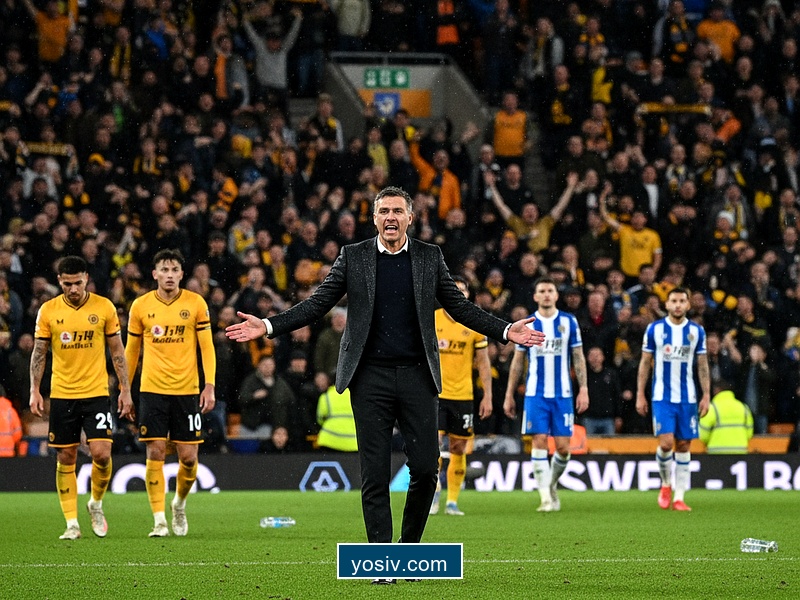
The Scene: The final whistle at Molineux did not bring the usual release of tension, but rather a cacophony of dissent that seemed to shake the very foundations of the Stan Cullis Stand. The rain had been falling steadily through the second half, slicking the pitch where Manchester United had just romped to a 4-1 victory, but it could not dampen the incendiary mood in the terraces. As the players trudged toward the tunnel, heads bowed, the sound was unmistakable—not merely the grumbling of a bad day at the office, but a visceral, guttural roar of disapproval. It was a sound that traveled from the South Bank, ricocheted off the Billy Wright Stand, and landed squarely on the shoulders of Rob Edwards.
Standing on the touchline, Edwards looked less like a modern tactician and more like a man caught in a storm without a coat. He did not run for cover. He stood, he watched, and as he later admitted, he understood. In that moment, the gap between the club's glorious, sepia-toned past and its frantic, fragile present felt wider than it has in years.
The Weight of the Shirt
To understand the fury that poured down from the stands, one must look further back than just this season's table or the ninety minutes dominated by the Red Devils. Wolverhampton Wanderers is an institution built on the bedrock of excellence. We are talking about the club of Stan Cullis, the team that pioneered floodlit football in the 1950s, the side that beat Honved and laid a claim to being champions of the world before the European Cup was even a glint in UEFA's eye.
When fans see a 4-1 capitulation at home, they aren't just comparing it to last week's game. Subconsciously, they measure it against the legends of Billy Wright and Bert Williams. They measure it against the resurgence under Nuno Espirito Santo, who, not so long ago, made Molineux a fortress where the Premier League's elite came to die. To lose is part of sport; to be dismantled in your own backyard is an affront to the heritage of the badge.
"I understand their anger," Edwards said. A simple sentence, yet it carries the weight of a confession. It is an acknowledgment that the contract between the pitch and the pew has been violated.
Edwards’ admission is crucial. A lesser manager might have pointed to injuries, to the financial might of Manchester United, or to the vagaries of VAR. By accepting the validity of the boos, Edwards aligns himself with the history of the club rather than fighting against it. He acknowledges that the standards expected in the Black Country are non-negotiable.
A Modern Crisis with Vintage Echoes
This 4-1 defeat serves as a brutal diagnostic of the current squad's fragility. Manchester United, despite their own turbulent decade, arrived at Molineux and found the door unlocked and the welcome mat laid out. The tactical breakdown was severe, but the psychological collapse was more worrying. This is where the historian pauses and frowns.
We have seen this movie before. In the early 1980s, before the abyss of the Fourth Division, there was a similar drift. Good players looked lost; the collective spirit evaporated when the first goal went in. The current iteration of Wolves possesses far more talent than those dark days, yet the lack of resilience is a haunting echo. When the third United goal hit the net, the fight drained out of the Old Gold shirts. That is what sparked the anger. The Molineux crowd will forgive a lack of quality; they will never forgive a lack of fight.
The Anatomy of the Collapse
- Defensive Disarray: The backline, usually a source of stubborn resistance, was pulled apart by simple movement. It wasn't genius from United; it was negligence from Wolves.
- Midfield Vacuum: The engine room, so often the heartbeat of Wolves' successes in the modern era, was bypassed with embarrassing ease.
- The Silence of the Leaders: Where was the on-pitch inquest? In years gone by, a Conor Coady or a Ruben Neves would have been screaming. Last night? Silence.
The Manager's Solitude
Rob Edwards now finds himself in a lonely lineage. The job of Wolves manager is a heavy coat to wear. The expectations are not merely to survive, but to entertain and to represent a working-class city with pride. When Nuno left, he took a certain aura with him. Since then, the club has been searching for an identity. Are they the Portuguese enclave of technical brilliance? Are they a gritty, pragmatic Premier League staple?
Right now, they look like neither. They look like a team caught between eras, unsure of their reflection in the mirror. Edwards is a bright, articulate coach, but words in a press conference—no matter how empathetic—do not clear the ball from the six-yard box. His understanding of the fans' anger buys him a sliver of time, perhaps a week, but it does not buy points.
The comparison to the past is stark. Cullis demanded total commitment. Nuno demanded shape and discipline. Edwards must now define what *his* Wolves demands. Because if the answer is "we tried our best," that will not suffice in a stadium that has hosted the world's best.
A Turning Point or a Tombstone?
Is this 4-1 defeat a blip, or is it the tremor before the earthquake? History tells us that when the Molineux crowd turns, the clock starts ticking loudly. The board, historically trigger-happy in modern times when panic sets in, will be listening to that noise.
However, there is another path. The great Wolves sides were often forged in adversity. If Edwards can take this anger, this raw energy from the stands, and channel it into a siege mentality, he can turn the narrative. He needs to remind his players that wearing the Old Gold is a privilege, not a chore. He needs to show them footage of the 1950s, or even the 2018 Championship winning season, to show them what happens when this city falls in love with its team.
The boos were not hatred; they were disappointed love. They were a plea for the team to be better, to be worthy of the history that surrounds them. Edwards says he understands. Now, he must prove that he can do more than understand—he must fix it. Because at Wolverhampton Wanderers, history is always watching, and it is a harsh judge.
The Scene: The final whistle at Molineux did not bring the usual release of tension, but rather a cacophony of dissent that seemed to shake the very foundations of the Stan Cullis Stand. The rain had been falling steadily through the second half, slicking the pitch where Manchester United had just romped to a 4-1 victory, but it could not dampen the incendiary mood in the terraces. As the players trudged toward the tunnel, heads bowed, the sound was unmistakable—not merely the grumbling of a bad day at the office, but a visceral, guttural roar of disapproval. It was a sound that traveled from the South Bank, ricocheted off the Billy Wright Stand, and landed squarely on the shoulders of Rob Edwards.
Standing on the touchline, Edwards looked less like a modern tactician and more like a man caught in a storm without a coat. He did not run for cover. He stood, he watched, and as he later admitted, he understood. In that moment, the gap between the club's glorious, sepia-toned past and its frantic, fragile present felt wider than it has in years.
The Weight of the Shirt
To understand the fury that poured down from the stands, one must look further back than just this season's table or the ninety minutes dominated by the Red Devils. Wolverhampton Wanderers is an institution built on the bedrock of excellence. We are talking about the club of Stan Cullis, the team that pioneered floodlit football in the 1950s, the side that beat Honved and laid a claim to being champions of the world before the European Cup was even a glint in UEFA's eye.
When fans see a 4-1 capitulation at home, they aren't just comparing it to last week's game. Subconsciously, they measure it against the legends of Billy Wright and Bert Williams. They measure it against the resurgence under Nuno Espirito Santo, who, not so long ago, made Molineux a fortress where the Premier League's elite came to die. To lose is part of sport; to be dismantled in your own backyard is an affront to the heritage of the badge.
"I understand their anger," Edwards said. A simple sentence, yet it carries the weight of a confession. It is an acknowledgment that the contract between the pitch and the pew has been violated.
Edwards’ admission is crucial. A lesser manager might have pointed to injuries, to the financial might of Manchester United, or to the vagaries of VAR. By accepting the validity of the boos, Edwards aligns himself with the history of the club rather than fighting against it. He acknowledges that the standards expected in the Black Country are non-negotiable.
A Modern Crisis with Vintage Echoes
This 4-1 defeat serves as a brutal diagnostic of the current squad's fragility. Manchester United, despite their own turbulent decade, arrived at Molineux and found the door unlocked and the welcome mat laid out. The tactical breakdown was severe, but the psychological collapse was more worrying. This is where the historian pauses and frowns.
We have seen this movie before. In the early 1980s, before the abyss of the Fourth Division, there was a similar drift. Good players looked lost; the collective spirit evaporated when the first goal went in. The current iteration of Wolves possesses far more talent than those dark days, yet the lack of resilience is a haunting echo. When the third United goal hit the net, the fight drained out of the Old Gold shirts. That is what sparked the anger. The Molineux crowd will forgive a lack of quality; they will never forgive a lack of fight.
The Anatomy of the Collapse
- Defensive Disarray: The backline, usually a source of stubborn resistance, was pulled apart by simple movement. It wasn't genius from United; it was negligence from Wolves.
- Midfield Vacuum: The engine room, so often the heartbeat of Wolves' successes in the modern era, was bypassed with embarrassing ease.
- The Silence of the Leaders: Where was the on-pitch inquest? In years gone by, a Conor Coady or a Ruben Neves would have been screaming. Last night? Silence.
The Manager's Solitude
Rob Edwards now finds himself in a lonely lineage. The job of Wolves manager is a heavy coat to wear. The expectations are not merely to survive, but to entertain and to represent a working-class city with pride. When Nuno left, he took a certain aura with him. Since then, the club has been searching for an identity. Are they the Portuguese enclave of technical brilliance? Are they a gritty, pragmatic Premier League staple?
Right now, they look like neither. They look like a team caught between eras, unsure of their reflection in the mirror. Edwards is a bright, articulate coach, but words in a press conference—no matter how empathetic—do not clear the ball from the six-yard box. His understanding of the fans' anger buys him a sliver of time, perhaps a week, but it does not buy points.
The comparison to the past is stark. Cullis demanded total commitment. Nuno demanded shape and discipline. Edwards must now define what *his* Wolves demands. Because if the answer is "we tried our best," that will not suffice in a stadium that has hosted the world's best.
A Turning Point or a Tombstone?
Is this 4-1 defeat a blip, or is it the tremor before the earthquake? History tells us that when the Molineux crowd turns, the clock starts ticking loudly. The board, historically trigger-happy in modern times when panic sets in, will be listening to that noise.
However, there is another path. The great Wolves sides were often forged in adversity. If Edwards can take this anger, this raw energy from the stands, and channel it into a siege mentality, he can turn the narrative. He needs to remind his players that wearing the Old Gold is a privilege, not a chore. He needs to show them footage of the 1950s, or even the 2018 Championship winning season, to show them what happens when this city falls in love with its team.
The boos were not hatred; they were disappointed love. They were a plea for the team to be better, to be worthy of the history that surrounds them. Edwards says he understands. Now, he must prove that he can do more than understand—he must fix it. Because at Wolverhampton Wanderers, history is always watching, and it is a harsh judge.