
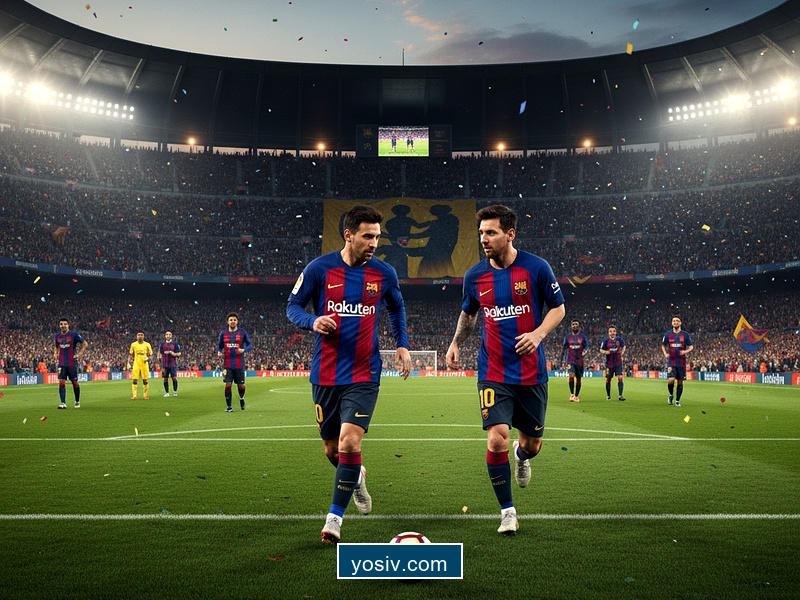
The microphone sat heavy on the table, a cold, unfeeling witness to a sentiment that was anything but. When the question was asked, the air in the room didn't just shift; it thickened with the weight of nostalgia. We weren't merely discussing a transfer rumor or a tactical retrospective. We were probing a wound that, despite the passage of time and the distraction of new trophies, remains raw and exposed in the heart of Catalonia. Andrés Iniesta, the Pale Knight of Stamford Bridge, the man who painted football with a brush made of silence and precision, leaned back. His eyes, usually scanning for a through-ball, now scanned the past.
He was speaking about Lionel Messi. Not the Messi of Inter Miami, cruising through the twilight of his career in pink, but the Messi of Barcelona. The relationship between the number 10 and the club that raised him isn't a chapter in a history book; it is a ghost story. And Iniesta, perhaps better than anyone, knows that ghost stories don't end just because you leave the haunted house.
The Anomaly of the Exit
To understand Iniesta's recent reflection, we have to strip away the PR gloss and look at the narrative arc of modern football. Heroes are supposed to have sunsets. Totti had Rome weeping. Ferguson had Old Trafford standing. But Messi and Barcelona? That was a Greek tragedy staged in a fluorescent-lit press conference room, punctuated by tears and a handkerchief that became a museum artifact.
Iniesta’s analysis cuts through the noise because it comes from a place of brotherhood. He views the current situation—Messi in America, Barcelona rebuilding in a rented stadium on a hill—as a glitch in the matrix. The Manchuego legend suggests that the relationship between the Argentine and the Blaugrana is something that transcends contracts. It is about identity. When Iniesta speaks, he highlights a fundamental truth: looking at Messi in another jersey still feels like seeing a family member in a stranger's house.
"It is unnatural," the sentiment echoes. "Some stories are written to have a specific ending, and this book was torn in half before the final chapter."
This isn't just an old teammate being sentimental. It is a critique of how the business of football managed to decapitate its greatest romance. Iniesta knows that for the cycle to truly close, there must be a return. Not necessarily to play—time is a villain that catches even the fastest—but to heal.
Tactical Echoes and the New Guard
Why does this reflection matter now, as Barcelona sits atop La Liga under Hansi Flick, dazzling the world with Lamine Yamal? Because the shadow of the '10' still dictates the standards. Iniesta’s comments remind us that the current success is built on the ruins of the Messi era. The "Baby Barça" we see today is the direct result of the financial implosion that forced Messi out.
However, analyzing the situation tactically, we see a divergence. Iniesta represents the "Control" era—the Xavi, Busquets, Iniesta triumvirate where the ball was a precious gem never to be lent to the opposition. Messi was the tip of that spear. Today's Barcelona is more direct, more chaotic, more vertical. Yet, the spiritual void remains.
- The Standard: Every time Lamine Yamal cuts inside on his left foot, the whispers begin. Iniesta knows this burden is unfair, yet inevitable.
- The Closure: A proper tribute isn't just a party; it's a ritual to release the new generation from the ghosts of the old.
- The Brand: Messi is Barça to a global audience. The separation hurts the club's soul as much as its balance sheet.
The Inevitable Convergence
Iniesta’s reflection points toward an inevitability. Physics dictates that what goes up must come down, but football heritage dictates that legends must return home. The relationship between Messi and the Barcelona board—specifically Joan Laporta—has been frosty, filled with unspoken accusations and the cold reality of economic levers. But Iniesta, playing the role of the sage, looks beyond the politics.
A Wound That Needs Stitching
Deep down, does it matter if Messi never kicks a ball for Barcelona again? Yes. It matters because football is not a spreadsheet. It is a collection of moments that make us feel alive. When Iniesta talks about his former teammate, he isn't analyzing a player’s stats; he is protecting the sanctity of their shared art.
Imagine the scene: The new Camp Nou opens. The lights dim. And there, standing in the center circle, is the man who built the modern era of the club. Not as an opponent, not as a tourist, but as a son returning from war. That is the moment Iniesta is alluding to. That is the closure the narrative demands.
Until that happens, the story remains broken. We are currently living in the uncomfortable middle chapters, where the hero is in exile and the kingdom is trying to remember who it is. Iniesta’s words serve as a gentle but firm reminder: you cannot erase history, and you certainly cannot ignore the greatest player of all time. The relationship is currently paused, frozen in a state of melancholy, but the final whistle on the Messi-Barça saga has not yet blown.
And until the day comes when Leo steps back onto that grass, even just to wave goodbye properly, Andrés Iniesta knows that the symphony remains unfinished. The silence left in the wake of his exit is still deafening.
The microphone sat heavy on the table, a cold, unfeeling witness to a sentiment that was anything but. When the question was asked, the air in the room didn't just shift; it thickened with the weight of nostalgia. We weren't merely discussing a transfer rumor or a tactical retrospective. We were probing a wound that, despite the passage of time and the distraction of new trophies, remains raw and exposed in the heart of Catalonia. Andrés Iniesta, the Pale Knight of Stamford Bridge, the man who painted football with a brush made of silence and precision, leaned back. His eyes, usually scanning for a through-ball, now scanned the past.
He was speaking about Lionel Messi. Not the Messi of Inter Miami, cruising through the twilight of his career in pink, but the Messi of Barcelona. The relationship between the number 10 and the club that raised him isn't a chapter in a history book; it is a ghost story. And Iniesta, perhaps better than anyone, knows that ghost stories don't end just because you leave the haunted house.
The Anomaly of the Exit
To understand Iniesta's recent reflection, we have to strip away the PR gloss and look at the narrative arc of modern football. Heroes are supposed to have sunsets. Totti had Rome weeping. Ferguson had Old Trafford standing. But Messi and Barcelona? That was a Greek tragedy staged in a fluorescent-lit press conference room, punctuated by tears and a handkerchief that became a museum artifact.
Iniesta’s analysis cuts through the noise because it comes from a place of brotherhood. He views the current situation—Messi in America, Barcelona rebuilding in a rented stadium on a hill—as a glitch in the matrix. The Manchuego legend suggests that the relationship between the Argentine and the Blaugrana is something that transcends contracts. It is about identity. When Iniesta speaks, he highlights a fundamental truth: looking at Messi in another jersey still feels like seeing a family member in a stranger's house.
"It is unnatural," the sentiment echoes. "Some stories are written to have a specific ending, and this book was torn in half before the final chapter."
This isn't just an old teammate being sentimental. It is a critique of how the business of football managed to decapitate its greatest romance. Iniesta knows that for the cycle to truly close, there must be a return. Not necessarily to play—time is a villain that catches even the fastest—but to heal.
Tactical Echoes and the New Guard
Why does this reflection matter now, as Barcelona sits atop La Liga under Hansi Flick, dazzling the world with Lamine Yamal? Because the shadow of the '10' still dictates the standards. Iniesta’s comments remind us that the current success is built on the ruins of the Messi era. The "Baby Barça" we see today is the direct result of the financial implosion that forced Messi out.
However, analyzing the situation tactically, we see a divergence. Iniesta represents the "Control" era—the Xavi, Busquets, Iniesta triumvirate where the ball was a precious gem never to be lent to the opposition. Messi was the tip of that spear. Today's Barcelona is more direct, more chaotic, more vertical. Yet, the spiritual void remains.
- The Standard: Every time Lamine Yamal cuts inside on his left foot, the whispers begin. Iniesta knows this burden is unfair, yet inevitable.
- The Closure: A proper tribute isn't just a party; it's a ritual to release the new generation from the ghosts of the old.
- The Brand: Messi is Barça to a global audience. The separation hurts the club's soul as much as its balance sheet.
The Inevitable Convergence
Iniesta’s reflection points toward an inevitability. Physics dictates that what goes up must come down, but football heritage dictates that legends must return home. The relationship between Messi and the Barcelona board—specifically Joan Laporta—has been frosty, filled with unspoken accusations and the cold reality of economic levers. But Iniesta, playing the role of the sage, looks beyond the politics.
A Wound That Needs Stitching
Deep down, does it matter if Messi never kicks a ball for Barcelona again? Yes. It matters because football is not a spreadsheet. It is a collection of moments that make us feel alive. When Iniesta talks about his former teammate, he isn't analyzing a player’s stats; he is protecting the sanctity of their shared art.
Imagine the scene: The new Camp Nou opens. The lights dim. And there, standing in the center circle, is the man who built the modern era of the club. Not as an opponent, not as a tourist, but as a son returning from war. That is the moment Iniesta is alluding to. That is the closure the narrative demands.
Until that happens, the story remains broken. We are currently living in the uncomfortable middle chapters, where the hero is in exile and the kingdom is trying to remember who it is. Iniesta’s words serve as a gentle but firm reminder: you cannot erase history, and you certainly cannot ignore the greatest player of all time. The relationship is currently paused, frozen in a state of melancholy, but the final whistle on the Messi-Barça saga has not yet blown.
And until the day comes when Leo steps back onto that grass, even just to wave goodbye properly, Andrés Iniesta knows that the symphony remains unfinished. The silence left in the wake of his exit is still deafening.