
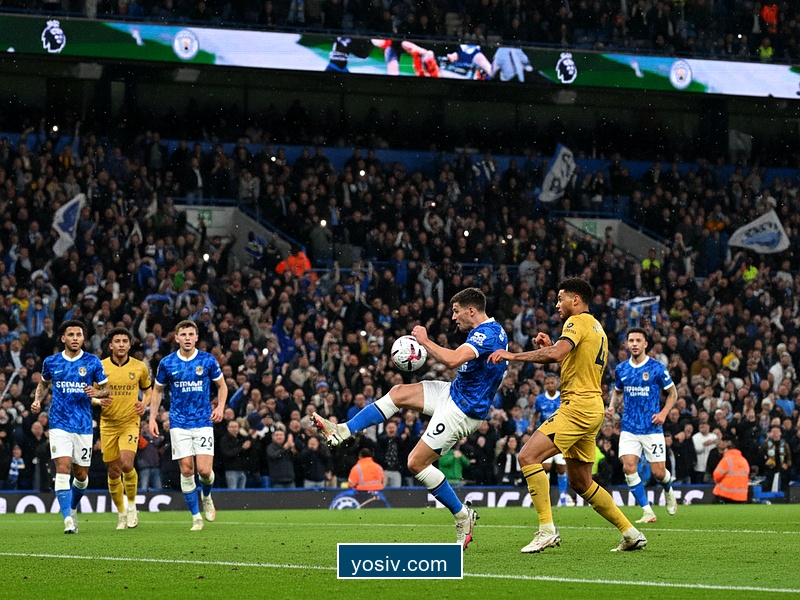
For decades, the English football weekend has not truly concluded until judgment is passed on a Monday morning. Before the algorithmic precision of Opta and the forensic dissections of Monday Night Football, there was the simple, combustible joy of the "Team of the Week." It is a tradition as ingrained in our sporting culture as the halftime pie or the post-match moan. When Troy Deeney stepped into the role previously occupied by the inimitable Garth Crooks, he didn't just take a job; he became the custodian of a specific type of football folklore.
To understand the weight of Deeney's selections, one must look back at the lineage of this format. In the print journalism era of the 1970s and 80s, the "Star XI" was the only recognition a player might receive outside of a trophy. It was a simpler time, devoid of Expected Goals (xG) or heat maps. If a center-half scored a header, he was in the team. If a goalkeeper saved a penalty, he was the hero. The nuance was lost, but the narrative was king. Deeney, a man who played the game with a bruised, distinctively physical style, seems to be dragging us back to that visceral interpretation of the sport.
The Shadow of Garth Crooks
We cannot analyze Deeney’s current tenure without acknowledging the chaotic brilliance of the era that preceded it. Garth Crooks ran the BBC Team of the Week like a surrealist art project for over a decade. His tenure was defined by a delightful disregard for tactical coherence. We saw 3-1-6 formations, wingers deployed as holding midfielders simply because they scored a brace, and justifications that often had nothing to do with football and everything to do with the player’s haircut or attitude.
Deeney offers a stark correction to that eccentricity. He brings the dressing room to the column inches. His selections this season have been less about the fantasy of what football could be, and more about the gritty reality of what the Premier League is. When Deeney picks a player, it is rarely because they looked pretty on the ball. It is usually because they showcased what he famously termed "cojones" during his Watford days. He values the dark arts, the tactical foul, and the ugly clearance. In a league increasingly obsessed with aesthetic perfection and passing triangles, Deeney’s Team of the Week is a homage to the effectiveness of brute force and mental resilience.
Deep Dive: The "Eye Test" vs. The Algorithm
This brings us to the core conflict of modern football coverage. We are living in the age of the spreadsheet. Clubs make multi-million pound decisions based on data points that the average fan cannot see. Yet, the Team of the Week remains a bastion of the "Eye Test."
Deeney’s role is critical because it validates the human element of the sport. A computer might rate a midfielder highly because he completed 98% of his passes, even if those passes were sideways and risk-averse. Deeney, however, will ignore that player in favor of the striker who touched the ball five times, lost it four times, but smashed home the winner in the 90th minute.
The implication here is profound. It suggests that despite the tactical revolutions of Guardiola and Klopp, the English game is still decided by moments of individual brilliance and psychological dominance. By selecting players who turn the tide of a match through sheer will rather than statistical accumulation, Deeney is preserving the "Barclays Heritage"—that chaotic, unscripted drama that made the league a global phenomenon in the early 2000s.
The Stat Pack: Narrative vs. Numbers
To illustrate this divide, we must look at how a "Deeney Pick" differs from a "Data Pick" in a typical Premier League game week. The following table contrasts the attributes valued by the human eye versus the cold logic of performance data.
| Criteria | The Deeney Pick (The Human Element) | The Data Pick (The Analytics) |
|---|---|---|
| Key Metric | Game-winning moments / Leadership | xG Chain / Progressive Carries |
| Ideal Player Archetype | The Old-School #9 (e.g., Chris Wood) | The Inverted Fullback (e.g., Zinchenko) |
| Defensive Valuation | "Putting body on the line" / Last ditch blocks | Interceptions / High defensive line positioning |
| Selection Flaw | Overlooks quiet efficiency | Undervalues psychological momentum |
Historically, players like Claude Makélélé or Michael Carrick often missed out on these media accolades because their brilliance was quiet. Deeney, a striker by trade, naturally gravitates toward the loud. He rewards the headline makers. This creates a fascinating friction where the official "Player of the Match" (often decided by commentary teams) and the "Team of the Week" inclusion are frequently at odds with the statistical "Man of the Match" provided by services like WhoScored or SofaScore.
Fan Pulse: The Validation Engine
Why does the average supporter care about one man's opinion? It comes down to tribal validation. In the 1990s, you bought the paper to see if your team's center-forward got a 9/10 rating. Today, fans scroll through X (formerly Twitter) to see if Deeney has recognized their club’s resurgence.
"It’s not just a list of names; it’s a weekly referendum on who matters in the Premier League."
The mood among fanbases is volatile. When a player from a "Big Six" club makes the team after a mediocre performance, the accusations of bias fly instantly. Conversely, when Deeney highlights a player from Luton Town or Sheffield United, he is championed as a man of the people, someone who remembers the struggle of the lower leagues.
Currently, there is a palpable sense of fatigue with "over-analysis" among match-going fans. They are tired of hearing about low blocks and transition triggers. They want to hear that their captain "wanted it more." Deeney taps into that vein. He speaks the language of the terrace rather than the tactics board.
The Verdict
<p style="font-size: 1.For decades, the English football weekend has not truly concluded until judgment is passed on a Monday morning. Before the algorithmic precision of Opta and the forensic dissections of Monday Night Football, there was the simple, combustible joy of the "Team of the Week." It is a tradition as ingrained in our sporting culture as the halftime pie or the post-match moan. When Troy Deeney stepped into the role previously occupied by the inimitable Garth Crooks, he didn't just take a job; he became the custodian of a specific type of football folklore.
To understand the weight of Deeney's selections, one must look back at the lineage of this format. In the print journalism era of the 1970s and 80s, the "Star XI" was the only recognition a player might receive outside of a trophy. It was a simpler time, devoid of Expected Goals (xG) or heat maps. If a center-half scored a header, he was in the team. If a goalkeeper saved a penalty, he was the hero. The nuance was lost, but the narrative was king. Deeney, a man who played the game with a bruised, distinctively physical style, seems to be dragging us back to that visceral interpretation of the sport.
The Shadow of Garth Crooks
We cannot analyze Deeney’s current tenure without acknowledging the chaotic brilliance of the era that preceded it. Garth Crooks ran the BBC Team of the Week like a surrealist art project for over a decade. His tenure was defined by a delightful disregard for tactical coherence. We saw 3-1-6 formations, wingers deployed as holding midfielders simply because they scored a brace, and justifications that often had nothing to do with football and everything to do with the player’s haircut or attitude.
Deeney offers a stark correction to that eccentricity. He brings the dressing room to the column inches. His selections this season have been less about the fantasy of what football could be, and more about the gritty reality of what the Premier League is. When Deeney picks a player, it is rarely because they looked pretty on the ball. It is usually because they showcased what he famously termed "cojones" during his Watford days. He values the dark arts, the tactical foul, and the ugly clearance. In a league increasingly obsessed with aesthetic perfection and passing triangles, Deeney’s Team of the Week is a homage to the effectiveness of brute force and mental resilience.
Deep Dive: The "Eye Test" vs. The Algorithm
This brings us to the core conflict of modern football coverage. We are living in the age of the spreadsheet. Clubs make multi-million pound decisions based on data points that the average fan cannot see. Yet, the Team of the Week remains a bastion of the "Eye Test."
Deeney’s role is critical because it validates the human element of the sport. A computer might rate a midfielder highly because he completed 98% of his passes, even if those passes were sideways and risk-averse. Deeney, however, will ignore that player in favor of the striker who touched the ball five times, lost it four times, but smashed home the winner in the 90th minute.
The implication here is profound. It suggests that despite the tactical revolutions of Guardiola and Klopp, the English game is still decided by moments of individual brilliance and psychological dominance. By selecting players who turn the tide of a match through sheer will rather than statistical accumulation, Deeney is preserving the "Barclays Heritage"—that chaotic, unscripted drama that made the league a global phenomenon in the early 2000s.
The Stat Pack: Narrative vs. Numbers
To illustrate this divide, we must look at how a "Deeney Pick" differs from a "Data Pick" in a typical Premier League game week. The following table contrasts the attributes valued by the human eye versus the cold logic of performance data.
| Criteria | The Deeney Pick (The Human Element) | The Data Pick (The Analytics) |
|---|---|---|
| Key Metric | Game-winning moments / Leadership | xG Chain / Progressive Carries |
| Ideal Player Archetype | The Old-School #9 (e.g., Chris Wood) | The Inverted Fullback (e.g., Zinchenko) |
| Defensive Valuation | "Putting body on the line" / Last ditch blocks | Interceptions / High defensive line positioning |
| Selection Flaw | Overlooks quiet efficiency | Undervalues psychological momentum |
Historically, players like Claude Makélélé or Michael Carrick often missed out on these media accolades because their brilliance was quiet. Deeney, a striker by trade, naturally gravitates toward the loud. He rewards the headline makers. This creates a fascinating friction where the official "Player of the Match" (often decided by commentary teams) and the "Team of the Week" inclusion are frequently at odds with the statistical "Man of the Match" provided by services like WhoScored or SofaScore.
Fan Pulse: The Validation Engine
Why does the average supporter care about one man's opinion? It comes down to tribal validation. In the 1990s, you bought the paper to see if your team's center-forward got a 9/10 rating. Today, fans scroll through X (formerly Twitter) to see if Deeney has recognized their club’s resurgence.
"It’s not just a list of names; it’s a weekly referendum on who matters in the Premier League."
The mood among fanbases is volatile. When a player from a "Big Six" club makes the team after a mediocre performance, the accusations of bias fly instantly. Conversely, when Deeney highlights a player from Luton Town or Sheffield United, he is championed as a man of the people, someone who remembers the struggle of the lower leagues.
Currently, there is a palpable sense of fatigue with "over-analysis" among match-going fans. They are tired of hearing about low blocks and transition triggers. They want to hear that their captain "wanted it more." Deeney taps into that vein. He speaks the language of the terrace rather than the tactics board.