
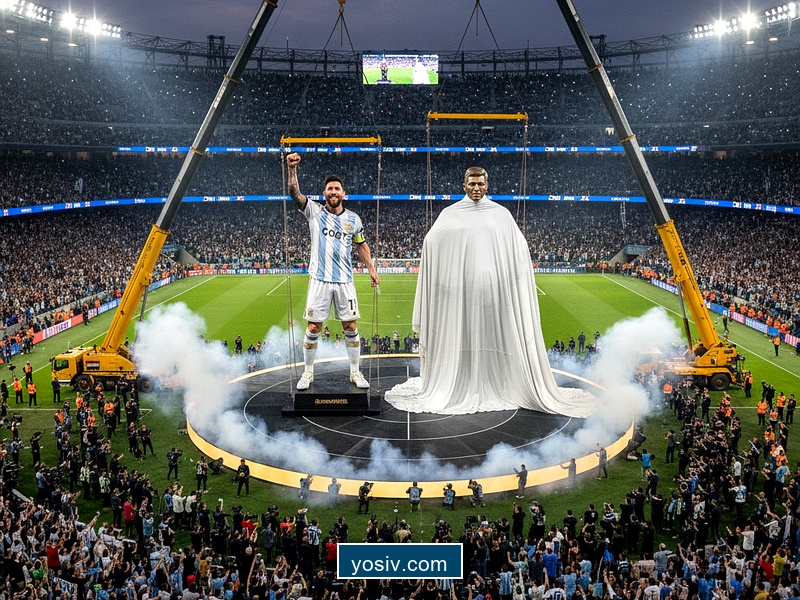
Lionel Messi has never been one for unnecessary movement. On the pitch, his genius lies in walking. He scans, he evaluates, and he waits for the precise moment when a burst of acceleration will yield the highest probability of a goal. His upcoming "GOAT Tour" in India, headlined by the unveiling of a staggering 70-foot statue, follows the exact same tactical blueprint.
This is not merely a celebrity appearance. It is a territorial claim. By planting a physical monument larger than the Angel of the North in a country synonymous with cricket, Messi and his management team are executing a high-press on the global sports market. The timing is impeccable. Fresh off a Copa América victory and amidst a transformative spell in MLS, the Argentine captain is pivoting from active competitor to mythical figure while still lacing up his boots.
The Tactical Defect in Traditional Marketing
Most European clubs fail to understand the Indian market. They send legends past their expiration dates to play exhibition matches that lack intensity, or they open academies that function more as revenue streams than talent incubators. This approach is tactically rigid and lacks vision. It assumes the market is passive.
Messi’s team has identified a gap in the defensive line. The fanaticism for Argentina in states like Kerala and West Bengal is not manufactured; it is organic and historically deep-rooted, often tied to anti-colonial sentiments where Latin American underdogs were favored over European giants. During the 2022 World Cup, visuals of 30-foot cutouts of Messi, Neymar, and Ronaldo erected in the middle of Indian rivers went viral globally.
By responding with a 70-foot permanent structure, Messi validates that fanaticism. He is effectively saying, "I see your 30-foot cutout, and I raise you a monument twice the size." It creates a tangible anchor for his brand in a region housing 1.4 billion people. Strategically, this is about converting casual admiration into generational loyalty. The "GOAT Tour" isn't a friendly; it's a cup final for commercial dominance.
The Stat Pack: Quantifying the Impact
To understand the necessity of this tour, we must look at the numbers. While football is the global game, the battle for eyes in the subcontinent is fierce. The data below illustrates why Messi is targeting this specific coordinate on the map.
| Metric | Lionel Messi | Virat Kohli (Cricket Icon) | Tactical Insight |
|---|---|---|---|
| Instagram Followers | 504 Million | 270 Million | Messi has double the reach, but Kohli owns the local density. Merging these demographics is the goal. |
| Market Valuation (Brand) | ~$600M Annual Impact | ~$200M Annual Impact | Messi brings global equity; Kohli brings regional dominance. |
| Physical Presence | 70ft Statue (Proposed) | Various Wax/Small Statues | Size matters. The scale of the statue asserts football's rising hierarchy over cricket. |
The disparity in global reach versus local density is the key variable here. Messi does not need more followers in Argentina or Spain. He has saturated those markets. Growth—the kind that investors in Inter Miami and Adidas care about—lives in the margins. India represents the largest remaining margin in world sport.
Formation Change: The Legacy Asset
We are witnessing the final evolution of the Messi role. He started as a winger, moved to the False 9 under Guardiola, evolved into the complete playmaker, and is now transitioning into the "Legacy Asset."
When a player builds a 70-foot likeness of himself, he is removing the volatility of human performance from his brand. A statue does not have a bad game. A statue does not get injured. A statue stands as a permanent reminder of greatness, impervious to the decay of time.
"This is the 'Jordan-izing' of Lionel Messi. It is the architectural step that separates an athlete from an icon. Michael Jordan has the Jumpman logo; Messi will have the Colossus of India."
This move also protects against the inevitable vacuum that will occur when he retires. Inter Miami has seen valuations skyrocket, but sustainability requires global physical touchpoints. If fans in Asia can’t see Messi play at the Camp Nou or Chase Stadium, they can visit the pilgrimage site of the statue. It creates a tourism economy around the player, independent of the club.
The Fan Pulse: Religious Fervor
The mood on the ground in India is not just excitement; it borders on hysteria. Football in the subcontinent is often dismissed by Western analysts who only look at FIFA rankings (India ranks 126th). This ignores the cultural reality on the terraces.
- The Cult of Personality: In regions like Kerala, Messi is not a sportsman; he is a deity. The announcement of the statue has triggered widespread celebrations, with fan clubs already organizing convoys to the unveiling site.
- The Cricket Conflict: There is a palpable tension among cricket traditionalists who view the encroachment of global football icons as a threat to the nation's primary religion. However, the younger demographic (Gen Z) is increasingly dual-screen, consuming IPL and Champions League simultaneously.
- Economic Optimism: Local vendors and businesses are anticipating a massive influx of tourism. The "Messi Economy" travels with him, as seen in Miami, and now it arrives in India.
Critics might argue this is egoism run amok. A 70-foot statue feels excessive. But in the context of modern sports marketing, subtlety is a losing tactic. You must dominate the skyline to dominate the headline. <
Lionel Messi has never been one for unnecessary movement. On the pitch, his genius lies in walking. He scans, he evaluates, and he waits for the precise moment when a burst of acceleration will yield the highest probability of a goal. His upcoming "GOAT Tour" in India, headlined by the unveiling of a staggering 70-foot statue, follows the exact same tactical blueprint.
This is not merely a celebrity appearance. It is a territorial claim. By planting a physical monument larger than the Angel of the North in a country synonymous with cricket, Messi and his management team are executing a high-press on the global sports market. The timing is impeccable. Fresh off a Copa América victory and amidst a transformative spell in MLS, the Argentine captain is pivoting from active competitor to mythical figure while still lacing up his boots.
The Tactical Defect in Traditional Marketing
Most European clubs fail to understand the Indian market. They send legends past their expiration dates to play exhibition matches that lack intensity, or they open academies that function more as revenue streams than talent incubators. This approach is tactically rigid and lacks vision. It assumes the market is passive.
Messi’s team has identified a gap in the defensive line. The fanaticism for Argentina in states like Kerala and West Bengal is not manufactured; it is organic and historically deep-rooted, often tied to anti-colonial sentiments where Latin American underdogs were favored over European giants. During the 2022 World Cup, visuals of 30-foot cutouts of Messi, Neymar, and Ronaldo erected in the middle of Indian rivers went viral globally.
By responding with a 70-foot permanent structure, Messi validates that fanaticism. He is effectively saying, "I see your 30-foot cutout, and I raise you a monument twice the size." It creates a tangible anchor for his brand in a region housing 1.4 billion people. Strategically, this is about converting casual admiration into generational loyalty. The "GOAT Tour" isn't a friendly; it's a cup final for commercial dominance.
The Stat Pack: Quantifying the Impact
To understand the necessity of this tour, we must look at the numbers. While football is the global game, the battle for eyes in the subcontinent is fierce. The data below illustrates why Messi is targeting this specific coordinate on the map.
| Metric | Lionel Messi | Virat Kohli (Cricket Icon) | Tactical Insight |
|---|---|---|---|
| Instagram Followers | 504 Million | 270 Million | Messi has double the reach, but Kohli owns the local density. Merging these demographics is the goal. |
| Market Valuation (Brand) | ~$600M Annual Impact | ~$200M Annual Impact | Messi brings global equity; Kohli brings regional dominance. |
| Physical Presence | 70ft Statue (Proposed) | Various Wax/Small Statues | Size matters. The scale of the statue asserts football's rising hierarchy over cricket. |
The disparity in global reach versus local density is the key variable here. Messi does not need more followers in Argentina or Spain. He has saturated those markets. Growth—the kind that investors in Inter Miami and Adidas care about—lives in the margins. India represents the largest remaining margin in world sport.
Formation Change: The Legacy Asset
We are witnessing the final evolution of the Messi role. He started as a winger, moved to the False 9 under Guardiola, evolved into the complete playmaker, and is now transitioning into the "Legacy Asset."
When a player builds a 70-foot likeness of himself, he is removing the volatility of human performance from his brand. A statue does not have a bad game. A statue does not get injured. A statue stands as a permanent reminder of greatness, impervious to the decay of time.
"This is the 'Jordan-izing' of Lionel Messi. It is the architectural step that separates an athlete from an icon. Michael Jordan has the Jumpman logo; Messi will have the Colossus of India."
This move also protects against the inevitable vacuum that will occur when he retires. Inter Miami has seen valuations skyrocket, but sustainability requires global physical touchpoints. If fans in Asia can’t see Messi play at the Camp Nou or Chase Stadium, they can visit the pilgrimage site of the statue. It creates a tourism economy around the player, independent of the club.
The Fan Pulse: Religious Fervor
The mood on the ground in India is not just excitement; it borders on hysteria. Football in the subcontinent is often dismissed by Western analysts who only look at FIFA rankings (India ranks 126th). This ignores the cultural reality on the terraces.
- The Cult of Personality: In regions like Kerala, Messi is not a sportsman; he is a deity. The announcement of the statue has triggered widespread celebrations, with fan clubs already organizing convoys to the unveiling site.
- The Cricket Conflict: There is a palpable tension among cricket traditionalists who view the encroachment of global football icons as a threat to the nation's primary religion. However, the younger demographic (Gen Z) is increasingly dual-screen, consuming IPL and Champions League simultaneously.
- Economic Optimism: Local vendors and businesses are anticipating a massive influx of tourism. The "Messi Economy" travels with him, as seen in Miami, and now it arrives in India.
Critics might argue this is egoism run amok. A 70-foot statue feels excessive. But in the context of modern sports marketing, subtlety is a losing tactic. You must dominate the skyline to dominate the headline. <