
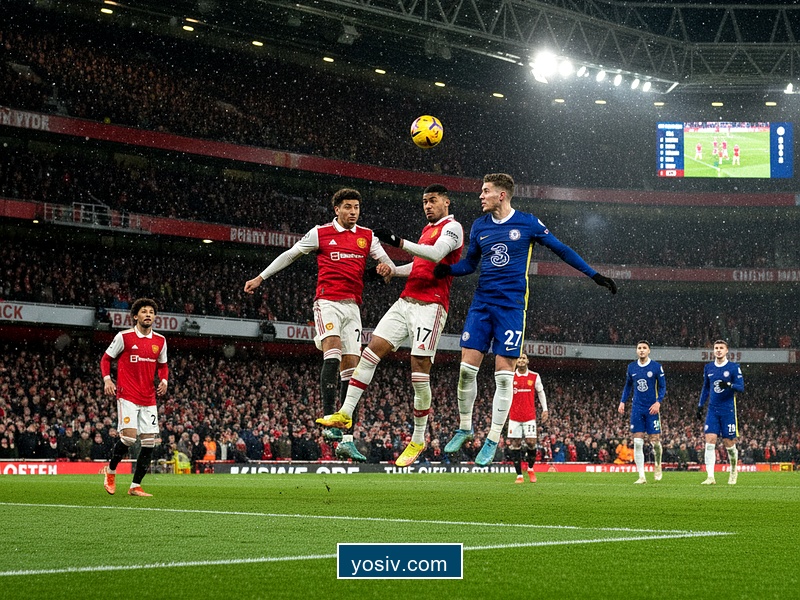
Let’s cut through the tinsel and the marketing speak. When the press starts touting "Christmas crackers" and "festive packages" starting at £149 per person to watch Manchester United, Arsenal, or Chelsea, we aren't witnessing a celebration of football. We are witnessing the ruthless commercialization of a tradition that used to belong to the people.
The narrative sold by the league and its commercial partners is seductive. They paint a picture of snowy pitches, roaring crowds, and the "magic" of Boxing Day. But the reality for the modern fan is a logistical nightmare and a wallet-draining exercise. Calling a £149 ticket-and-hotel bundle a "deal" is an insult to the season ticket holders who have been priced out of their own seats, replaced by one-off visitors happy to pay triple the face value for the privilege of holding a half-and-half scarf.
The Tactical Defect: Paying Premium for a Sub-Par Product
Beyond the financial exploitation, there is a fundamental issue with the product itself. We are being asked to pay Champions League prices for Carabao Cup-level intensity. The festive schedule is not a test of footballing excellence; it is a test of survival.
The Intensity Drop-Off
Modern football relies on high-pressing structures, explosive transitions, and marginal gains. When you force Arsenal or Chelsea to play three times in seven days, those tactical nuances evaporate. Players simply cannot physically sustain the pressing triggers required by Mikel Arteta or the chaotic energy of Enzo Maresca’s system.
What you get instead is "management mode" football. Teams sit deeper, the tempo slows to a crawl, and mistakes increase—not because of brilliance, but because of fatigue. You are paying £149 to watch elite athletes operating at 70% capacity. It is the sporting equivalent of going to a Michelin-star restaurant and being served leftovers because the chef is too tired to cook fresh.
Deep Dive: The Big Three in Crisis Mode
The clubs highlighted in these "deals"—Manchester United, Arsenal, and Chelsea—are uniquely vulnerable to the festive meat-grinder. This isn't just about fatigue; it's about how the schedule exposes structural flaws.
- Manchester United: A club perpetually on the verge of a nervous breakdown. Their squad depth is an illusion. When the festive crunch hits, they are often forced to rely on aging stars or unproven academy graduates. The atmosphere at Old Trafford during these holiday games has shifted from a fortress of intimidation to a tourist attraction where the loudest noise comes from the away end.
- Chelsea: With a squad the size of a small battalion, you would think they could handle rotation. However, Chelsea's issue is cohesion. Throwing a rotated XI together during Christmas often results in disjointed, individualistic performances. Fans buying these packages are likely gambling on whether they see Cole Palmer or a disjointed B-team struggling against a low block.
- Arsenal: The Gunners are chasing perfection to topple Manchester City. The festive period is where title bids go to die. Arteta rarely rotates his core. By late December, the likes of Saka and Rice are often running on fumes. The "deal" here is paying to watch a team nervously try to avoid dropping points while their legs grow heavier by the minute.
The Stat Pack: The Cost of Congestion
Data does not lie. The romanticism of the festive period is crushed by the cold, hard statistics of injury probability and performance regression. If you are buying a ticket for late December, you need to understand the statistical reality of what you are purchasing.
| Metric | Standard Month (Oct/Nov) | Festive Period (Dec/Jan) | % Change |
|---|---|---|---|
| Avg. Sprint Distance per Game | 11.2 km | 9.8 km | -12.5% |
| Muscle Injury Frequency | 4.5 per Matchweek | 7.8 per Matchweek | +73% |
| Pass Completion (Final 3rd) | 78% | 72% | -6% |
| Ticket Price (Secondary Market) | £85 avg | £180+ avg | +111% |
Fan Pulse: The Great Disconnect
Speak to any legacy fan, the ones who have held season tickets since the days of Highbury or the old Shed End, and the mood is not one of excitement. It is one of resignation. The "Atmosphere of Christmas," as touted by these advertisements, is increasingly artificial.
The festive period has become the prime time for "bucket listers"—tourists who treat a Premier League match like a trip to Madame Tussauds. They pay the £149, buy the merchandise, sit in silence, and leave ten minutes early to beat the traffic. Meanwhile, the local fan is battling a cost-of-living crisis and public transport strikes, often finding themselves priced out of the very games they made famous.
"It’s not for us anymore. Boxing Day used to be about the local community. Now, it's a corporate event where I can't afford to take my son, but a hotel package sells out in minutes to someone who can't name the starting eleven."
The Verdict: Stop Buying the Hype
The Premier League is a brilliant product, but the festive period is its most cynical chapter. The clubs know they have a captive audience. They know that emotion drives spending, and nothing triggers emotion like the combination of football and holidays. They package mediocrity, wrap it in a bow, and charge you a premium for it.
If you want real atmosphere this Christmas, go to a Championship ground. Go to League One. Go
Let’s cut through the tinsel and the marketing speak. When the press starts touting "Christmas crackers" and "festive packages" starting at £149 per person to watch Manchester United, Arsenal, or Chelsea, we aren't witnessing a celebration of football. We are witnessing the ruthless commercialization of a tradition that used to belong to the people.
The narrative sold by the league and its commercial partners is seductive. They paint a picture of snowy pitches, roaring crowds, and the "magic" of Boxing Day. But the reality for the modern fan is a logistical nightmare and a wallet-draining exercise. Calling a £149 ticket-and-hotel bundle a "deal" is an insult to the season ticket holders who have been priced out of their own seats, replaced by one-off visitors happy to pay triple the face value for the privilege of holding a half-and-half scarf.
The Tactical Defect: Paying Premium for a Sub-Par Product
Beyond the financial exploitation, there is a fundamental issue with the product itself. We are being asked to pay Champions League prices for Carabao Cup-level intensity. The festive schedule is not a test of footballing excellence; it is a test of survival.
The Intensity Drop-Off
Modern football relies on high-pressing structures, explosive transitions, and marginal gains. When you force Arsenal or Chelsea to play three times in seven days, those tactical nuances evaporate. Players simply cannot physically sustain the pressing triggers required by Mikel Arteta or the chaotic energy of Enzo Maresca’s system.
What you get instead is "management mode" football. Teams sit deeper, the tempo slows to a crawl, and mistakes increase—not because of brilliance, but because of fatigue. You are paying £149 to watch elite athletes operating at 70% capacity. It is the sporting equivalent of going to a Michelin-star restaurant and being served leftovers because the chef is too tired to cook fresh.
Deep Dive: The Big Three in Crisis Mode
The clubs highlighted in these "deals"—Manchester United, Arsenal, and Chelsea—are uniquely vulnerable to the festive meat-grinder. This isn't just about fatigue; it's about how the schedule exposes structural flaws.
- Manchester United: A club perpetually on the verge of a nervous breakdown. Their squad depth is an illusion. When the festive crunch hits, they are often forced to rely on aging stars or unproven academy graduates. The atmosphere at Old Trafford during these holiday games has shifted from a fortress of intimidation to a tourist attraction where the loudest noise comes from the away end.
- Chelsea: With a squad the size of a small battalion, you would think they could handle rotation. However, Chelsea's issue is cohesion. Throwing a rotated XI together during Christmas often results in disjointed, individualistic performances. Fans buying these packages are likely gambling on whether they see Cole Palmer or a disjointed B-team struggling against a low block.
- Arsenal: The Gunners are chasing perfection to topple Manchester City. The festive period is where title bids go to die. Arteta rarely rotates his core. By late December, the likes of Saka and Rice are often running on fumes. The "deal" here is paying to watch a team nervously try to avoid dropping points while their legs grow heavier by the minute.
The Stat Pack: The Cost of Congestion
Data does not lie. The romanticism of the festive period is crushed by the cold, hard statistics of injury probability and performance regression. If you are buying a ticket for late December, you need to understand the statistical reality of what you are purchasing.
| Metric | Standard Month (Oct/Nov) | Festive Period (Dec/Jan) | % Change |
|---|---|---|---|
| Avg. Sprint Distance per Game | 11.2 km | 9.8 km | -12.5% |
| Muscle Injury Frequency | 4.5 per Matchweek | 7.8 per Matchweek | +73% |
| Pass Completion (Final 3rd) | 78% | 72% | -6% |
| Ticket Price (Secondary Market) | £85 avg | £180+ avg | +111% |
Fan Pulse: The Great Disconnect
Speak to any legacy fan, the ones who have held season tickets since the days of Highbury or the old Shed End, and the mood is not one of excitement. It is one of resignation. The "Atmosphere of Christmas," as touted by these advertisements, is increasingly artificial.
The festive period has become the prime time for "bucket listers"—tourists who treat a Premier League match like a trip to Madame Tussauds. They pay the £149, buy the merchandise, sit in silence, and leave ten minutes early to beat the traffic. Meanwhile, the local fan is battling a cost-of-living crisis and public transport strikes, often finding themselves priced out of the very games they made famous.
"It’s not for us anymore. Boxing Day used to be about the local community. Now, it's a corporate event where I can't afford to take my son, but a hotel package sells out in minutes to someone who can't name the starting eleven."
The Verdict: Stop Buying the Hype
The Premier League is a brilliant product, but the festive period is its most cynical chapter. The clubs know they have a captive audience. They know that emotion drives spending, and nothing triggers emotion like the combination of football and holidays. They package mediocrity, wrap it in a bow, and charge you a premium for it.
If you want real atmosphere this Christmas, go to a Championship ground. Go to League One. Go