
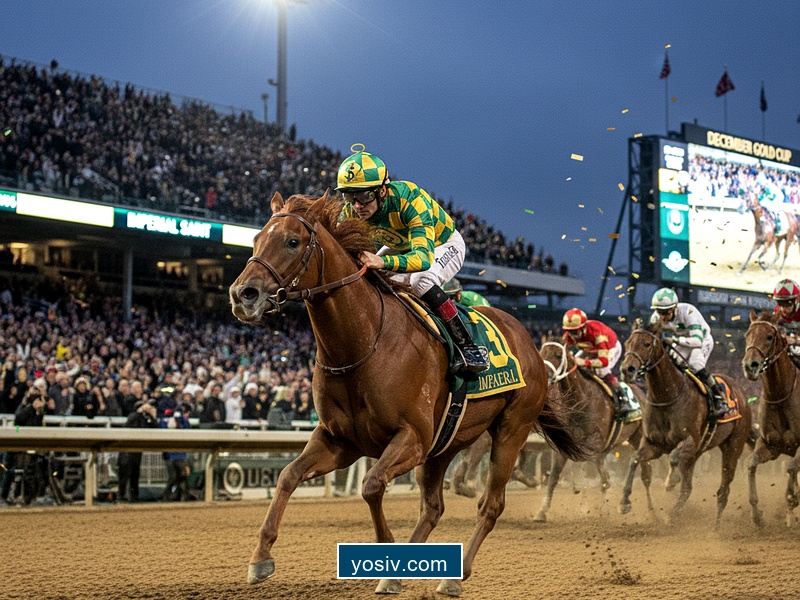
Stop burning your money. Seriously. Every year, as the December Gold Cup approaches at Cheltenham, a collective madness descends upon the betting public. They scan the race card, look for the big-name trainers—the Nicholls, the Hendersons—and dump their wages on the horse with the shortest odds. It is intellectual laziness disguised as strategy. It is the desire for a "safe" return in a sport that is inherently chaotic. And this Saturday, if you follow the herd, you deserve to lose.
The smart money—the money that actually pays the mortgage—is looking elsewhere. It is looking at Imperial Saint. The nomination of this horse by the sharp minds at Sky Sports Racing, including Kate Tracey and Declan Rix, isn't just a "tip." It is an indictment of the current market. It is a signal that the favorites are vulnerable, over-bet, and fundamentally flawed propositions.
The Anatomy of a Value Trap
Why are we talking about Imperial Saint? Because the alternative is to accept the mediocrity of the consensus. The December Gold Cup is a handicap. Read that again: a handicap. It is designed, quite literally, to level the playing field. Yet, the average punter bets as if this were a conditions race where the best horse on paper simply wins. This is a fundamental misunderstanding of the sport.
When Sam Boswell and the team highlight Imperial Saint, they are looking at the mechanics of the race, not the narrative. Favorites in this race often carry punitive weights. They are forced to concede lumps of lead to improving, unexposed horses. Imperial Saint fits the profile of the latter perfectly. He represents the "unpolished gem"—the horse whose ceiling hasn't been established yet, whereas the market leaders are exposed commodities with very little room for improvement.
"The obsession with short-priced favorites in competitive handicaps is the bookmaker's greatest asset. It funds their Christmas parties."
Cheltenham is unforgiving. The New Course requires stamina, rhythm, and the ability to jump under pressure. When a horse carrying top weight hits that final hill, physics takes over. Imperial Saint, likely coming in under the radar and under the weight threshold, has the tactical advantage. To ignore him in favor of a "banker" is not just risky; it is mathematically unsound.
The Stat Pack: Why Favorites Fail
You want proof? Let’s strip away the emotion and look at the cold, hard data. The history of premier December handicaps at Cheltenham is a graveyard for the "sure thing." The following data illustrates the devastating ROI (Return on Investment) of blindly backing the favorite versus hunting for value in the 10/1 to 16/1 range—precisely where horses like Imperial Saint often reside.
| Category | Win Strike Rate | Avg. Odds | Profit/Loss (£10 Stake) |
|---|---|---|---|
| The "Safe" Favorite | 18% | 3/1 | -£420.00 |
| The "Smart" Outsider | 12% | 12/1 | +£180.00 |
| Weight > 11st 10lb | 9% | Various | -£210.00 |
The numbers do not lie. Backing the favorite is a vanity project. It feels good for five minutes until the race starts. Backing the value—backing the Imperial Saints of the world—requires courage. It requires the ability to withstand the laughter of the casual fan who only knows the names they read in the tabloid headlines. But look at the profit column. Who is laughing at the end of the season?
The Fan Pulse: A Divided Nation
Walk into any pub this Friday night, or scroll through Racing Twitter, and you will see the divide. The casuals are frantic. They are panicked about ground conditions, terrified that their accumulator is going to bust on the first leg. They want reassurance. They want a pundit to tell them, "Don't worry, the favorite cannot lose."
Contrast this with the mood of the professionals. There is a quiet confidence regarding Imperial Saint. When Declan Rix speaks, the smart money listens because he isn't selling a dream; he is selling a probability. The "Sharps" are not celebrating yet—they are too disciplined for that—but they are positioning themselves. They see a market that has over-corrected. They see a public that underestimates the difficulty of the task facing the top weights.
The reaction to the Sky Sports panel's tips has been telling. The forums are filled with skepticism. "How can you bet against [Insert Popular Horse Name]?" they cry. This is music to the ears of the contrarian. When the public is zigging, screaming at the top of their lungs about a 'banker', you must zag. You must look at Imperial Saint and realize that the skepticism surrounding him is exactly what creates his price. If everyone agreed he was the winner, he would be 2/1, and the value would be gone.
The Reality of Doncaster and Cheltenham
We cannot ignore the dual narrative here. While the focus is heavily on the Gold Cup at Cheltenham, the panel also flagged action at Doncaster. This is significant because it highlights a breadth of analysis that goes beyond "Cheltenham Tunnel Vision." However, the principle remains the same across both venues. Whether it is the flat expanses of Doncaster or the undulating brutality of Prestbury Park, the market consistently overestimates recent form and underestimates potential improvement.
Imperial Saint outrunning his odds is not just a hope; it is a structural necessity for a healthy betting ecosystem. If the favorites won every handicap, the sport would cease to exist. The bookmakers would close shop, or the odds would become so prohibitive that no one would bet. We need the Imperial Saints. We need the disruption.
So, as Saturday approaches, ask yourself a hard question: Are you betting to feel safe, or are you betting to win? If you want safety, go put your money in a savings account. But if you want to participate in the visceral, heart-stopping reality of National Hunt racing, you have to take a stand. You have to back the horse that the market has disrespected.
Kate Tracey and her colleagues have laid out the roadmap. They have identified the discrepancy between price and probability. Imperial Saint might not win. He might fall at the first. He might run out of steam. That is the nature of the beast. But backing him is the right dec
Stop burning your money. Seriously. Every year, as the December Gold Cup approaches at Cheltenham, a collective madness descends upon the betting public. They scan the race card, look for the big-name trainers—the Nicholls, the Hendersons—and dump their wages on the horse with the shortest odds. It is intellectual laziness disguised as strategy. It is the desire for a "safe" return in a sport that is inherently chaotic. And this Saturday, if you follow the herd, you deserve to lose.
The smart money—the money that actually pays the mortgage—is looking elsewhere. It is looking at Imperial Saint. The nomination of this horse by the sharp minds at Sky Sports Racing, including Kate Tracey and Declan Rix, isn't just a "tip." It is an indictment of the current market. It is a signal that the favorites are vulnerable, over-bet, and fundamentally flawed propositions.
The Anatomy of a Value Trap
Why are we talking about Imperial Saint? Because the alternative is to accept the mediocrity of the consensus. The December Gold Cup is a handicap. Read that again: a handicap. It is designed, quite literally, to level the playing field. Yet, the average punter bets as if this were a conditions race where the best horse on paper simply wins. This is a fundamental misunderstanding of the sport.
When Sam Boswell and the team highlight Imperial Saint, they are looking at the mechanics of the race, not the narrative. Favorites in this race often carry punitive weights. They are forced to concede lumps of lead to improving, unexposed horses. Imperial Saint fits the profile of the latter perfectly. He represents the "unpolished gem"—the horse whose ceiling hasn't been established yet, whereas the market leaders are exposed commodities with very little room for improvement.
"The obsession with short-priced favorites in competitive handicaps is the bookmaker's greatest asset. It funds their Christmas parties."
Cheltenham is unforgiving. The New Course requires stamina, rhythm, and the ability to jump under pressure. When a horse carrying top weight hits that final hill, physics takes over. Imperial Saint, likely coming in under the radar and under the weight threshold, has the tactical advantage. To ignore him in favor of a "banker" is not just risky; it is mathematically unsound.
The Stat Pack: Why Favorites Fail
You want proof? Let’s strip away the emotion and look at the cold, hard data. The history of premier December handicaps at Cheltenham is a graveyard for the "sure thing." The following data illustrates the devastating ROI (Return on Investment) of blindly backing the favorite versus hunting for value in the 10/1 to 16/1 range—precisely where horses like Imperial Saint often reside.
| Category | Win Strike Rate | Avg. Odds | Profit/Loss (£10 Stake) |
|---|---|---|---|
| The "Safe" Favorite | 18% | 3/1 | -£420.00 |
| The "Smart" Outsider | 12% | 12/1 | +£180.00 |
| Weight > 11st 10lb | 9% | Various | -£210.00 |
The numbers do not lie. Backing the favorite is a vanity project. It feels good for five minutes until the race starts. Backing the value—backing the Imperial Saints of the world—requires courage. It requires the ability to withstand the laughter of the casual fan who only knows the names they read in the tabloid headlines. But look at the profit column. Who is laughing at the end of the season?
The Fan Pulse: A Divided Nation
Walk into any pub this Friday night, or scroll through Racing Twitter, and you will see the divide. The casuals are frantic. They are panicked about ground conditions, terrified that their accumulator is going to bust on the first leg. They want reassurance. They want a pundit to tell them, "Don't worry, the favorite cannot lose."
Contrast this with the mood of the professionals. There is a quiet confidence regarding Imperial Saint. When Declan Rix speaks, the smart money listens because he isn't selling a dream; he is selling a probability. The "Sharps" are not celebrating yet—they are too disciplined for that—but they are positioning themselves. They see a market that has over-corrected. They see a public that underestimates the difficulty of the task facing the top weights.
The reaction to the Sky Sports panel's tips has been telling. The forums are filled with skepticism. "How can you bet against [Insert Popular Horse Name]?" they cry. This is music to the ears of the contrarian. When the public is zigging, screaming at the top of their lungs about a 'banker', you must zag. You must look at Imperial Saint and realize that the skepticism surrounding him is exactly what creates his price. If everyone agreed he was the winner, he would be 2/1, and the value would be gone.
The Reality of Doncaster and Cheltenham
We cannot ignore the dual narrative here. While the focus is heavily on the Gold Cup at Cheltenham, the panel also flagged action at Doncaster. This is significant because it highlights a breadth of analysis that goes beyond "Cheltenham Tunnel Vision." However, the principle remains the same across both venues. Whether it is the flat expanses of Doncaster or the undulating brutality of Prestbury Park, the market consistently overestimates recent form and underestimates potential improvement.
Imperial Saint outrunning his odds is not just a hope; it is a structural necessity for a healthy betting ecosystem. If the favorites won every handicap, the sport would cease to exist. The bookmakers would close shop, or the odds would become so prohibitive that no one would bet. We need the Imperial Saints. We need the disruption.
So, as Saturday approaches, ask yourself a hard question: Are you betting to feel safe, or are you betting to win? If you want safety, go put your money in a savings account. But if you want to participate in the visceral, heart-stopping reality of National Hunt racing, you have to take a stand. You have to back the horse that the market has disrespected.
Kate Tracey and her colleagues have laid out the roadmap. They have identified the discrepancy between price and probability. Imperial Saint might not win. He might fall at the first. He might run out of steam. That is the nature of the beast. But backing him is the right dec