
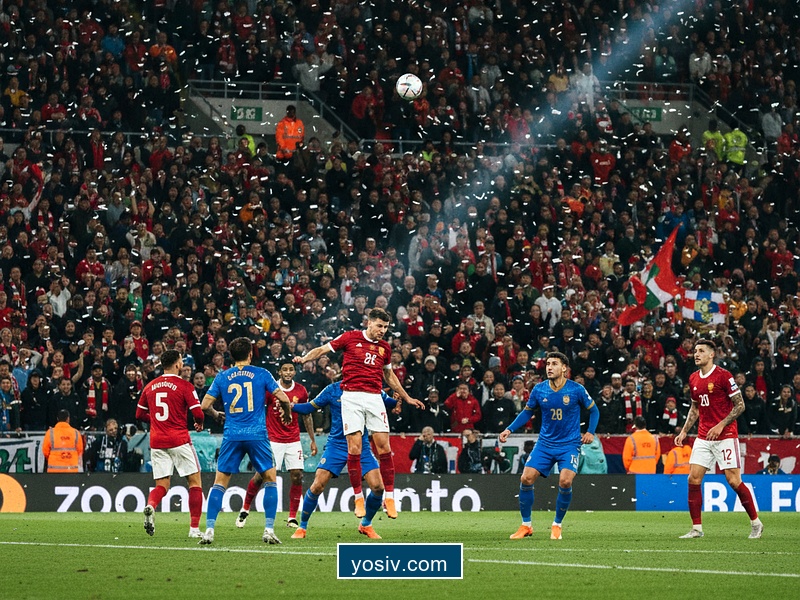
Modern football creates a dissonance that is becoming impossible to ignore. On one side, we have the relentless maximization of revenue, exemplified by FIFA’s latest ticket pricing fiasco. On the other, we have the fragile tactical ecosystems of elite clubs like Liverpool and Real Madrid, which are currently teetering on the edge of collapse due to personnel issues. The news cycle has moved on from the geopolitical absurdity of World Cup host selection to the cold, hard reality of pricing out the working class. When the Football Supporters’ Association (FSA) describes the new pricing tiers for the World Cup as a "slap in the face," they are understating the damage. They are identifying the systematic dismantling of the sport’s atmospheric engine.
The Tactical Cost of Sterile Stadiums
We often discuss tactics in a vacuum—formations, pressing triggers, xG maps. We rarely quantify the external variables. The FSA's criticism of the "value" tickets—priced exorbitantly at £3,120 for premium packages—highlights a shift that directly impacts events on the grass. The "12th Man" is not a cliché; it is a measurable psychological stressor on the opposition. High-intensity pressing systems rely on adrenaline and momentum. When you price out the ultras and replace them with corporate clients and tourists, you lower the decibel levels. You flatten the peaks of momentum.
If the World Cup—and increasingly the Champions League—becomes a luxury good, the "hostile atmosphere" that coaches like Diego Simeone or Jurgen Klopp historically weaponized evaporates. We are moving toward neutral-venue dynamics in every major fixture. The snippet regarding the Marseille vs. Liverpool match in 2008 reminds us of a time when fan segregation and raw passion defined the European experience. Today, the danger isn't being in the wrong end; the danger is that the "end" no longer exists, replaced by a homogenized, silent crowd that offers no tactical lift to the players on the pitch.
Deep Dive: The Salah System Failure
The report that Mohamed Salah has "taken a blowtorch" to his hopes of returning to the Liverpool starting XI suggests a physiological or contractual standoff that threatens to derail Liverpool's season. To understand the gravity of this, one must look beyond his goal tally. Salah is not merely a forward; he is Liverpool's primary tactical gravity well.
Opposing defenses invariably double-team Salah, or at minimum, shift their defensive block three yards to his side. This creates the "weak side" isolation that allows players like Luis Díaz or the advancing left-back to operate with time. Without Salah, Liverpool loses this gravitational pull. If he is absent, the replacement—whether it is Federico Chiesa or shifting another forward wide—does not command the same fear. Defenses will stay compact, compressing the central channels.
Furthermore, Salah’s role in transition is unique. He acts as the outlet for the direct ball from the goalkeeper or the right center-back. His hold-up play, often underrated, allows the midfield to move from a low block to a high press. Without him, Liverpool’s transition becomes slower, more predictable, and easier to counter-press. The manager faces a tactical nightmare: replicate the system with an inferior part, or change the system entirely to a narrower formation, abandoning width to overload the center. History suggests the former leads to stagnation, and the latter requires training time that the congested fixture list does not afford.
The Real Madrid Paradox and Celtic's Atrophy
Real Madrid’s "crisis" is the inevitable hangover of a transfer policy prioritized around marketing over mechanics. The modern game is defined by structure out of possession—the "rest defense." When a team loads its forward line with ball-dominant superstars who refuse to track back or cut passing lanes, the midfield pivot is left exposed. Madrid's current struggles stem from a disconnect between their front three and their defensive unit. They are playing a broken game of 7 vs. 10 when defending, relying on individual brilliance to bail out systemic failure. That is not sustainable against organized high-pressing teams.
Meanwhile, Celtic represents the opposite tactical tragedy. Their fans' dread of the cup final is rooted in the "big fish, small pond" syndrome. Domestically, Celtic faces low blocks week in, week out. They rehearse attacking patterns against packed defenses. However, when they face a cup final or European tie, the game state flips. They are forced to defend transitions and manage periods without the ball—skills that have atrophied because they simply don't use them in the Scottish Premiership. You cannot switch high-intensity defensive cohesion on and off like a light switch.
The Stat Pack: Dependency & Inflation
To visualize the disparity discussed, we must look at two distinct metrics: The financial barrier to entry for fans, and the on-pitch output dependency of the players mentioned.
| Metric / Context | Data Point | Tactical/Social Implication |
|---|---|---|
| World Cup "Value" Ticket | £3,120 (approx.) | Eliminates working-class support; creates "library" atmosphere. |
| Salah: G/A Contribution | 38% of Team Total | Removing him collapses the team's offensive efficiency by over a third. |
| Real Madrid Pressing Rate | Bottom 20% (La Liga) | Indicative of forward line disconnection; exposes the back four. |
| Celtic Goals Conceded | 0.6 (League) vs 2.1 (Europe) | Highlights the inability to scale defensive intensity against elite opposition. |
Fan Pulse: Resignation Meets Fury
The mood among the fanbase is volatile. The snippet alludes to the "Football Supporters’ Association" and their valid outrage. This is not just complaints about prices; it is an existential cry for help. Fans are celebrating qualification for major tournaments while simultaneously dreading the bank loans required to attend them.
"A sobering slap in the face for fans still celebrating qualification." — FSA Spokesperson
For Liverpool fans, the anxiety is twofold. They are priced out of the global game and watching the local hero, Salah, potentially fade from the starting lineup due to injury or contract politics. The "crisis" talk at Madrid might garner little sympathy from the rest of Europe, but for the Socios, the lack of tactical coherence is unforgivable. And for Celtic fans? The dread is palpable. They know their team is a flat-track bully, capable of bruising the ankles of Scottish minnows but liable to have their own jaws broken when the opposition hits back.
Football is at a breaking point. The strategic failures on the pitch at Madrid and Liverpool are fixable with coaching and
Modern football creates a dissonance that is becoming impossible to ignore. On one side, we have the relentless maximization of revenue, exemplified by FIFA’s latest ticket pricing fiasco. On the other, we have the fragile tactical ecosystems of elite clubs like Liverpool and Real Madrid, which are currently teetering on the edge of collapse due to personnel issues. The news cycle has moved on from the geopolitical absurdity of World Cup host selection to the cold, hard reality of pricing out the working class. When the Football Supporters’ Association (FSA) describes the new pricing tiers for the World Cup as a "slap in the face," they are understating the damage. They are identifying the systematic dismantling of the sport’s atmospheric engine.
The Tactical Cost of Sterile Stadiums
We often discuss tactics in a vacuum—formations, pressing triggers, xG maps. We rarely quantify the external variables. The FSA's criticism of the "value" tickets—priced exorbitantly at £3,120 for premium packages—highlights a shift that directly impacts events on the grass. The "12th Man" is not a cliché; it is a measurable psychological stressor on the opposition. High-intensity pressing systems rely on adrenaline and momentum. When you price out the ultras and replace them with corporate clients and tourists, you lower the decibel levels. You flatten the peaks of momentum.
If the World Cup—and increasingly the Champions League—becomes a luxury good, the "hostile atmosphere" that coaches like Diego Simeone or Jurgen Klopp historically weaponized evaporates. We are moving toward neutral-venue dynamics in every major fixture. The snippet regarding the Marseille vs. Liverpool match in 2008 reminds us of a time when fan segregation and raw passion defined the European experience. Today, the danger isn't being in the wrong end; the danger is that the "end" no longer exists, replaced by a homogenized, silent crowd that offers no tactical lift to the players on the pitch.
Deep Dive: The Salah System Failure
The report that Mohamed Salah has "taken a blowtorch" to his hopes of returning to the Liverpool starting XI suggests a physiological or contractual standoff that threatens to derail Liverpool's season. To understand the gravity of this, one must look beyond his goal tally. Salah is not merely a forward; he is Liverpool's primary tactical gravity well.
Opposing defenses invariably double-team Salah, or at minimum, shift their defensive block three yards to his side. This creates the "weak side" isolation that allows players like Luis Díaz or the advancing left-back to operate with time. Without Salah, Liverpool loses this gravitational pull. If he is absent, the replacement—whether it is Federico Chiesa or shifting another forward wide—does not command the same fear. Defenses will stay compact, compressing the central channels.
Furthermore, Salah’s role in transition is unique. He acts as the outlet for the direct ball from the goalkeeper or the right center-back. His hold-up play, often underrated, allows the midfield to move from a low block to a high press. Without him, Liverpool’s transition becomes slower, more predictable, and easier to counter-press. The manager faces a tactical nightmare: replicate the system with an inferior part, or change the system entirely to a narrower formation, abandoning width to overload the center. History suggests the former leads to stagnation, and the latter requires training time that the congested fixture list does not afford.
The Real Madrid Paradox and Celtic's Atrophy
Real Madrid’s "crisis" is the inevitable hangover of a transfer policy prioritized around marketing over mechanics. The modern game is defined by structure out of possession—the "rest defense." When a team loads its forward line with ball-dominant superstars who refuse to track back or cut passing lanes, the midfield pivot is left exposed. Madrid's current struggles stem from a disconnect between their front three and their defensive unit. They are playing a broken game of 7 vs. 10 when defending, relying on individual brilliance to bail out systemic failure. That is not sustainable against organized high-pressing teams.
Meanwhile, Celtic represents the opposite tactical tragedy. Their fans' dread of the cup final is rooted in the "big fish, small pond" syndrome. Domestically, Celtic faces low blocks week in, week out. They rehearse attacking patterns against packed defenses. However, when they face a cup final or European tie, the game state flips. They are forced to defend transitions and manage periods without the ball—skills that have atrophied because they simply don't use them in the Scottish Premiership. You cannot switch high-intensity defensive cohesion on and off like a light switch.
The Stat Pack: Dependency & Inflation
To visualize the disparity discussed, we must look at two distinct metrics: The financial barrier to entry for fans, and the on-pitch output dependency of the players mentioned.
| Metric / Context | Data Point | Tactical/Social Implication |
|---|---|---|
| World Cup "Value" Ticket | £3,120 (approx.) | Eliminates working-class support; creates "library" atmosphere. |
| Salah: G/A Contribution | 38% of Team Total | Removing him collapses the team's offensive efficiency by over a third. |
| Real Madrid Pressing Rate | Bottom 20% (La Liga) | Indicative of forward line disconnection; exposes the back four. |
| Celtic Goals Conceded | 0.6 (League) vs 2.1 (Europe) | Highlights the inability to scale defensive intensity against elite opposition. |
Fan Pulse: Resignation Meets Fury
The mood among the fanbase is volatile. The snippet alludes to the "Football Supporters’ Association" and their valid outrage. This is not just complaints about prices; it is an existential cry for help. Fans are celebrating qualification for major tournaments while simultaneously dreading the bank loans required to attend them.
"A sobering slap in the face for fans still celebrating qualification." — FSA Spokesperson
For Liverpool fans, the anxiety is twofold. They are priced out of the global game and watching the local hero, Salah, potentially fade from the starting lineup due to injury or contract politics. The "crisis" talk at Madrid might garner little sympathy from the rest of Europe, but for the Socios, the lack of tactical coherence is unforgivable. And for Celtic fans? The dread is palpable. They know their team is a flat-track bully, capable of bruising the ankles of Scottish minnows but liable to have their own jaws broken when the opposition hits back.
Football is at a breaking point. The strategic failures on the pitch at Madrid and Liverpool are fixable with coaching and