
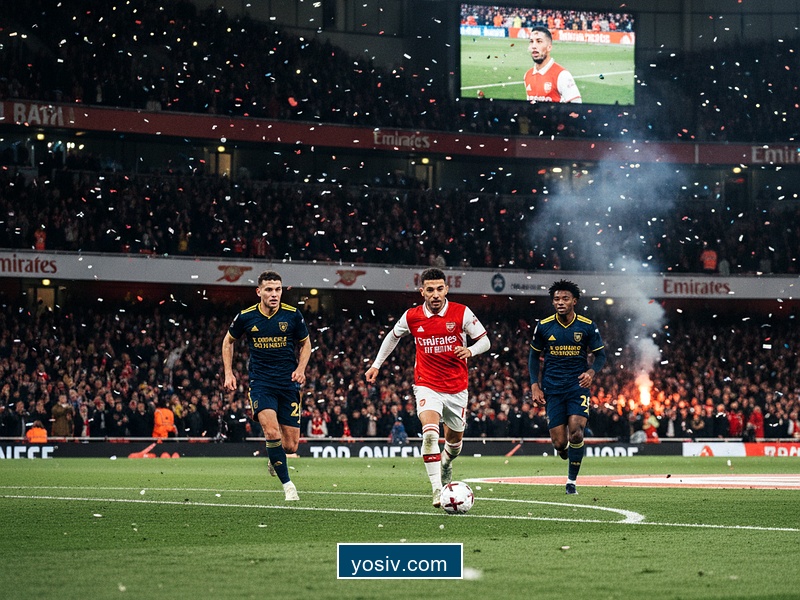
Memory in football is a fickle, fleeting thing. It erodes faster than the chalk on a rain-soaked touchline. When Gabriel Jesus arrived at the Emirates Stadium from Manchester City, he did not merely bring his boots; he brought a belief system. He was the catalyst that transformed a team of hopefuls into a team of believers. Yet, as recent reports from Fichajes indicate that Arsenal have fielded—and rejected—multiple enquiries for the Brazilian striker, we find ourselves at a curious crossroads. The club has made a decision: despite the injuries and the goal droughts, Jesus stays.
This stance is about more than just retaining a player. It is a declaration of intent that separates the current Arsenal regime from the dark days of the post-Highbury transition. For the better part of a decade, Arsenal functioned as a finishing school for Europe’s elite, nurturing talent only to sell it when the silverware seemed too heavy to lift. Keeping Gabriel Jesus, despite the temptations of the market and his recent fitness struggles, suggests that the days of capitulation are over.
The Ghost of Sales Past
To understand the significance of this decision, one must look back at the scars borne by the fanbase. Cast your mind to the summer of 2011, or the winter of 2012. We watched Cesc Fàbregas return home, Samir Nasri chase the oil money, and Robin van Persie defect to Manchester United to win the title that Arsenal could not promise him. During those barren years, a bid for a player like Jesus—an established international with perceived value—would have been accepted with a grim pragmatism. The bank balance took precedence over the trophy cabinet.
Mikel Arteta and Edu Gaspar have rewritten this script. By refusing to entertain offers, they are echoing the sentiment of the George Graham era or the early Wenger years. In 1999, when Real Madrid circled Nicolas Anelka, Arsenal sold him only to fund a training ground and Thierry Henry. It was a calculated gamble, not a surrender. Today, keeping Jesus is not a gamble; it is insurance. It is the recognition that to overthrow a juggernaut like Manchester City, you cannot discard your generals just because they have suffered a few wounds in battle.
The Tactical Necessity: Why He Matters
Critics point to the scoreboard, and they are not entirely wrong to do so. A striker is judged by goals. However, reducing Gabriel Jesus to his goal tally is akin to judging a goalkeeper solely by his distribution; it ignores the primary function of his specific role in this specific system. Jesus is the agent of chaos.
When Arsenal plays with Kai Havertz, they have a target, a duel-winner, a structural focal point. But when they play with Jesus, they have fluidity. His tendency to drift wide, to drop deep into the number 10 spaces, and to engage in relentless pressing triggers the spaces that Bukayo Saka and Gabriel Martinelli exploit. He is the oil in the engine. Without him, the machine can look rigid.
The "Deep Dive" here reveals that Arteta is attempting to build a squad capable of playing two distinct styles of football. Plan A requires the physicality of Havertz. Plan B—or perhaps Plan A2—requires the street-football tenacity of Jesus. To sell him now would be to voluntarily remove a tactical dimension from the manager's playbook. In the history of the Premier League, depth has always been king. The Manchester United treble winners had four elite strikers. Arsenal’s Invincibles had Wiltord and Kanu ready to step in for Henry and Bergkamp. We are seeing a return to that standard.
The Stat Pack: Beyond the Goalsheet
Data often tells the story that the naked eye misses. While fans lament missed chances, the underlying metrics show why Jesus remains elite in build-up and defensive contribution from the front—traits that are non-negotiable for Arteta.
| Metric (Per 90 mins - Career Avg) | Gabriel Jesus | Typical PL Striker Avg | Historical Context |
|---|---|---|---|
| Shot-Creating Actions | 3.85 | 2.10 | Comparable to Dennis Bergkamp's creative output (late era). |
| Progressive Carries | 3.15 | 1.25 | Functions more like a winger/10 than a pure 9. |
| Tackles in Attacking 3rd | 0.95 | 0.30 | Elite defensive forward; sets the pressing tone. |
| Touches in Opp. Box | 8.40 | 5.20 | High volume presence, creates panic in defenses. |
The numbers indicate a player who facilitates the system. While we all desire the 30-goal season of an Ian Wright or a Thierry Henry, the modern game—and specifically Guardiola-influenced systems—often distribute the goalscoring burden. Jesus is the facilitator.
The Fan Pulse: A House Divided
Walk around the pubs of Islington or scroll through the digital terraces of social media, and you will find the fanbase fractured on this issue. The modern fan, conditioned by transfer window hype and viral clips, craves the "upgrade." There is a vocal contingent, frustrated by Jesus's knee issues and sporadic finishing, who would have driven him to the airport personally if it meant signing a Viktor Gyökeres or an Alexander Isak.
"We need a killer. Jesus is a magician, but sometimes you just need someone to swing a hammer." — Common sentiment among the N5 faithful.
However, the "wise heads"—those who remember the fragility of the post-2006 era—see the logic. They understand that squad harmony and tactical understanding are not bought off the shelf. They remember that Kanu didn't start every game in 2002, but his presence was vital. There is a cautious optimism that a fully fit Jesus, operating perhaps with less pressure as Havertz shares the
Memory in football is a fickle, fleeting thing. It erodes faster than the chalk on a rain-soaked touchline. When Gabriel Jesus arrived at the Emirates Stadium from Manchester City, he did not merely bring his boots; he brought a belief system. He was the catalyst that transformed a team of hopefuls into a team of believers. Yet, as recent reports from Fichajes indicate that Arsenal have fielded—and rejected—multiple enquiries for the Brazilian striker, we find ourselves at a curious crossroads. The club has made a decision: despite the injuries and the goal droughts, Jesus stays.
This stance is about more than just retaining a player. It is a declaration of intent that separates the current Arsenal regime from the dark days of the post-Highbury transition. For the better part of a decade, Arsenal functioned as a finishing school for Europe’s elite, nurturing talent only to sell it when the silverware seemed too heavy to lift. Keeping Gabriel Jesus, despite the temptations of the market and his recent fitness struggles, suggests that the days of capitulation are over.
The Ghost of Sales Past
To understand the significance of this decision, one must look back at the scars borne by the fanbase. Cast your mind to the summer of 2011, or the winter of 2012. We watched Cesc Fàbregas return home, Samir Nasri chase the oil money, and Robin van Persie defect to Manchester United to win the title that Arsenal could not promise him. During those barren years, a bid for a player like Jesus—an established international with perceived value—would have been accepted with a grim pragmatism. The bank balance took precedence over the trophy cabinet.
Mikel Arteta and Edu Gaspar have rewritten this script. By refusing to entertain offers, they are echoing the sentiment of the George Graham era or the early Wenger years. In 1999, when Real Madrid circled Nicolas Anelka, Arsenal sold him only to fund a training ground and Thierry Henry. It was a calculated gamble, not a surrender. Today, keeping Jesus is not a gamble; it is insurance. It is the recognition that to overthrow a juggernaut like Manchester City, you cannot discard your generals just because they have suffered a few wounds in battle.
The Tactical Necessity: Why He Matters
Critics point to the scoreboard, and they are not entirely wrong to do so. A striker is judged by goals. However, reducing Gabriel Jesus to his goal tally is akin to judging a goalkeeper solely by his distribution; it ignores the primary function of his specific role in this specific system. Jesus is the agent of chaos.
When Arsenal plays with Kai Havertz, they have a target, a duel-winner, a structural focal point. But when they play with Jesus, they have fluidity. His tendency to drift wide, to drop deep into the number 10 spaces, and to engage in relentless pressing triggers the spaces that Bukayo Saka and Gabriel Martinelli exploit. He is the oil in the engine. Without him, the machine can look rigid.
The "Deep Dive" here reveals that Arteta is attempting to build a squad capable of playing two distinct styles of football. Plan A requires the physicality of Havertz. Plan B—or perhaps Plan A2—requires the street-football tenacity of Jesus. To sell him now would be to voluntarily remove a tactical dimension from the manager's playbook. In the history of the Premier League, depth has always been king. The Manchester United treble winners had four elite strikers. Arsenal’s Invincibles had Wiltord and Kanu ready to step in for Henry and Bergkamp. We are seeing a return to that standard.
The Stat Pack: Beyond the Goalsheet
Data often tells the story that the naked eye misses. While fans lament missed chances, the underlying metrics show why Jesus remains elite in build-up and defensive contribution from the front—traits that are non-negotiable for Arteta.
| Metric (Per 90 mins - Career Avg) | Gabriel Jesus | Typical PL Striker Avg | Historical Context |
|---|---|---|---|
| Shot-Creating Actions | 3.85 | 2.10 | Comparable to Dennis Bergkamp's creative output (late era). |
| Progressive Carries | 3.15 | 1.25 | Functions more like a winger/10 than a pure 9. |
| Tackles in Attacking 3rd | 0.95 | 0.30 | Elite defensive forward; sets the pressing tone. |
| Touches in Opp. Box | 8.40 | 5.20 | High volume presence, creates panic in defenses. |
The numbers indicate a player who facilitates the system. While we all desire the 30-goal season of an Ian Wright or a Thierry Henry, the modern game—and specifically Guardiola-influenced systems—often distribute the goalscoring burden. Jesus is the facilitator.
The Fan Pulse: A House Divided
Walk around the pubs of Islington or scroll through the digital terraces of social media, and you will find the fanbase fractured on this issue. The modern fan, conditioned by transfer window hype and viral clips, craves the "upgrade." There is a vocal contingent, frustrated by Jesus's knee issues and sporadic finishing, who would have driven him to the airport personally if it meant signing a Viktor Gyökeres or an Alexander Isak.
"We need a killer. Jesus is a magician, but sometimes you just need someone to swing a hammer." — Common sentiment among the N5 faithful.
However, the "wise heads"—those who remember the fragility of the post-2006 era—see the logic. They understand that squad harmony and tactical understanding are not bought off the shelf. They remember that Kanu didn't start every game in 2002, but his presence was vital. There is a cautious optimism that a fully fit Jesus, operating perhaps with less pressure as Havertz shares the