
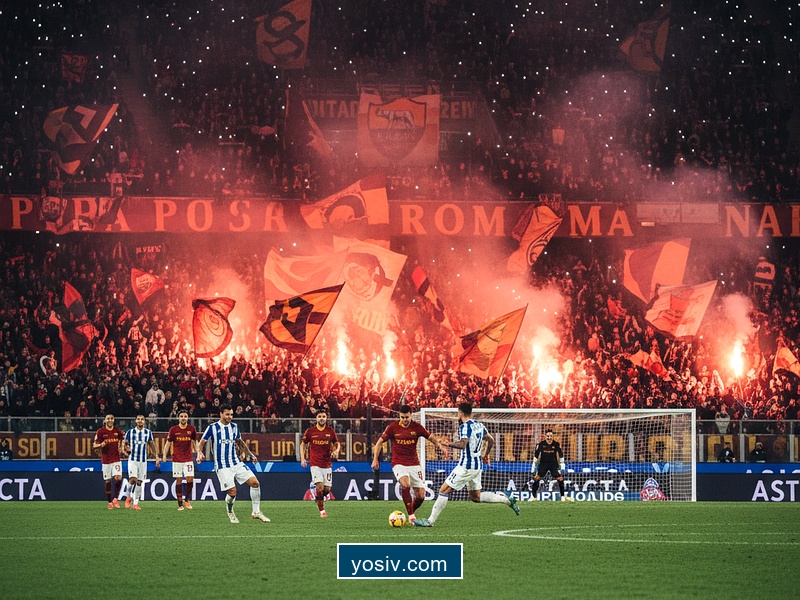
The sky over the Trigoria training ground is turning that particular shade of grey that portends a storm, yet the meteorological conditions are the least of the concerns for AS Roma. We have seen the fixture list. We have analyzed the spacing between matches. To call the December and January slate "busy" is a polite understatement—it is a gauntlet thrown down by the league schedulers, a test of depth that the Giallorossi have historically failed.
This is not merely a congestion of games. It is a structural stress test for the entire Friedkin project. The club sits on a precipice where the difference between Champions League revenue and another year of mediocrity will be decided before the first almond trees blossom in February. The narrative of a "transition season" has expired. The patience of the Stadio Olimpico is wearing thin. As we look at the run of games confronting the capital club, we must look past the 90 minutes on the pitch and identify the seismic shifts these eight weeks will trigger in the boardroom.
The Managerial Guillotine
Let us speak plainly about job security. In modern Calcio, the manager’s chair at Roma is equipped with an ejector seat wired directly to the December results. The slate of games facing the club leaves zero margin for error. A stumble against lower-tier opposition in the league, compounded by fatigue in European competition, will not just result in dropped points. It will result in a termination letter.
The ownership has proven they are reactive. If Roma enters the Christmas break drifting away from the European spots, the pressure to change leadership before the January transfer window opens becomes insurmountable. This schedule is a trap. It forces rotation upon a squad that lacks quality beyond the starting eleven. If the manager refuses to rotate, players break. If he rotates and loses, he is fired.
We are likely watching a slow-motion referendum on the current tactical setup. If the team cannot maintain intensity through this bi-weekly grind, the fallout will be immediate. The press in Rome does not forgive winter slumps. By mid-January, we will either see a team galvanized by survival or a new face in the dugout attempting to salvage the wreckage.
The January Mercato: Panic or Precision?
The direct consequence of this packed schedule will manifest in the transfer market. This is where the true danger lies. When a team suffers under the weight of a heavy slate, injuries occur. It is a biological certainty. Hamstrings snap, ankles roll, and fatigue sets in. Roma enters January not looking for luxury additions, but likely desperate for warm bodies to fill gaps exposed by the December grind.
This creates a leverage problem. Selling clubs smell desperation. If Roma’s midfield collapses under the workload in December, the price for a replacement in January doubles. The club’s sporting director faces a nightmare scenario: overpaying for stop-gap solutions to save a season that might already be slipping away.
Conversely, if the team navigates the slate successfully, the strategy shifts. Instead of panic buying, the club can target the one specific piece needed to push for the Champions League. The results of these eight weeks dictate the financial strategy for the next three years. A bad December leads to panic spending, which leads to FFP violations, which leads to future sanctions. The domino effect is terrifyingly real.
| Scenario | Market Consequence | Long-term Impact |
|---|---|---|
| The Collapse | Panic buys, loans with heavy obligations. | Wage bill bloat, FFP restrictions return. |
| The Stagnation | Conservative, low-cost youth signings. | Another year in Europa League purgatory. |
| The Surge | One marquee signing to seal Top 4. | UCL revenue secures squad future. |
The Physical Toll on the Crown Jewels
We must address the fragility of the stars. Roma relies heavily on individual brilliance to unlock defenses. The slate ahead does not allow for rest. Paulo Dybala, notoriously fragile, cannot play every three days for two months without consequence. The management of his minutes becomes the single most important tactical decision of the winter.
If Dybala breaks down in mid-December, the creative engine of the team stalls. But holding him back risks dropping points in "winnable" games that suddenly become draws. It is a gamble with the highest stakes. The medical staff at Trigoria will earn their salaries ten times over in this period. We are looking at a situation where the availability of two or three key players determines whether Roma fights for fourth or languishes in eighth.
The Financial Reckoning
Ultimately, this schedule is a balance sheet issue. The Friedkin Group has poured money into the club, stabilizing the debt but failing to ignite the revenue rocket that is the Champions League. They cannot sustain this level of investment without the elite European payout.
This winter slate is the gateway. Failure here makes the math impossible to solve in the spring. If the gap to fourth place widens to seven or eight points by the end of January, the focus shifts to asset liquidation in the summer. We are talking about the potential sale of key talents to balance the books. The consequences of these 60 days will echo into the summer of 2025.
Roma stands at the crossroads. One path leads to the elite table of Europe, funded by success and smart management. The other path, paved with dropped points in the freezing rain of December, leads to a firesale and another "Year Zero." The players may see a ball and a pitch, but the rest of us see the future being written in real-time. The winter is here, and it will take no prisoners.