
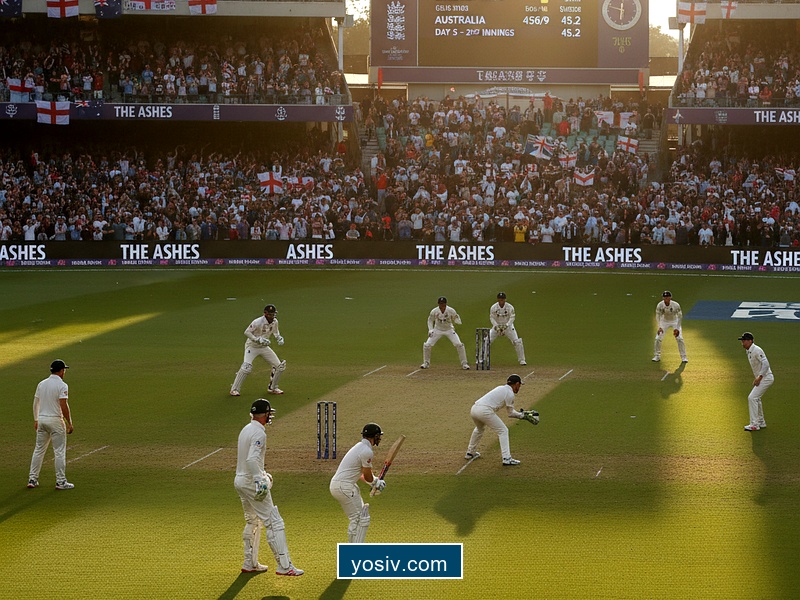
The Adelaide Oval is a cruel theatre for the dying embers of an English campaign. It is picturesque, certainly, with its cathedral end and the manicured grass banks, but for touring captains, it often serves as a sun-drenched guillotine. As the shadows lengthened on Day One of this defining Third Test, with Usman Khawaja and Alex Carey mercilessly dissecting the English attack, the camera found Ben Stokes. He stood at mid-off, cap pulled low, the scorching South Australian heat radiating off the turf. He did not scream. He did not gesture wildly. He simply stared.
We have seen this look before. It is the look of a man trying to bend reality to his will through sheer spiritual force. But this time, the glare carried a different weight. It was not the manic belief of Headingley in 2019, nor the revolutionary zeal of the early "Bazball" era. This was the heavy, burdened gaze of a leader standing at the last-chance saloon, realizing the doors are about to be barred shut.
The scorecard will tell you that Australia dominated the opening exchanges. It will record the runs flowing from Carey’s bat and the immovable object that is Khawaja. But the true story of this Test, and perhaps this entire era of English cricket, is written on the face of Benjamin Andrew Stokes. This is his Waterloo. Down 2-0, with the urn slipping through fingers that are battered and bruised, Stokes is attempting to conjure one last miracle in a land that specializes in crushing them.
The Anatomy of a Crumbling Empire
To understand the tragedy of this moment, one must appreciate the height from which Stokes is falling. He reinvented the longest format of the game. He took a team that had forgotten how to win and taught them how to entertain, how to be fearless. But revolutions, by their nature, eventually face a counter-revolution. Australia, pragmatic and ruthless, has not panicked. They have simply waited for the English fire to burn itself out.
Now, facing the point of no return, Stokes finds himself isolated. The philosophy that made him a messiah is being questioned. The aggressive fields, the refusal to draw matches, the relentless positivity—in the harsh light of an 0-2 deficit, these traits risk looking less like bravery and more like hubris. Yet, Stokes refuses to blink. His call to "show a bit of dog" is not a tactical instruction. It is a plea for violence of spirit. It is a demand for his players to access the same dark, competitive reserves that he has mined for a decade.
But here lies the tragedy: Stokes is asking his men to be him, and there is only one Ben Stokes. The body is creaking. The knee, held together by tape and willpower, protests with every stride to the crease. The back stiffens. He is a warrior whose armor is falling apart, piece by piece, yet he insists on standing at the front of the phalanx.
A Captain in the Shadow of Tragedy
The context of this series has been heavy. As reports suggest, the tour has proceeded in the shadow of tragedy, adding a layer of somber introspection to the locker room. In such times, a captain is more than a tactician; he is a grief counselor, a father figure, and a lightning rod. Stokes has absorbed this pressure, shielding his players from the media glare, taking the difficult questions, and insisting that the focus remain on the 22 yards of turf.
It takes a toll. You could see it in Adelaide as the Australian openers piled on the agony. There was a weariness in Stokes’ movements that transcended physical fatigue. It was the exhaustion of a man who has carried a nation's expectations for too long. He has been the hero of the World Cup final, the miracle worker of Headingley, the savior of the test team. Now, he risks becoming the captain who presided over a whitewash.
Great athletes often speak of "dying little deaths" during losses. For Stokes, watching his bowlers struggle to penetrate the defenses of Khawaja was a slow, agonizing demise. Every boundary hit by Carey was a nail in the coffin of the "Bazball" mystique. The Australian strategy was clear: grind the captain down. Break his spirit, and the rest will follow.
The Final Act of Defiance
And yet, it is foolish to write the obituary of a man who has made a career out of resurrection. The "dog" he speaks of is dormant, not dead. The beauty of Stokes’ narrative is that he is most dangerous when he is cornered. The logic of cricket dictates that England is finished. The form guide suggests a mauling. But Stokes operates outside of logic. He operates on emotion and adrenaline.
| The Stokes Factor | The Reality |
|---|---|
| Leadership Style | Total aggression ("Show a bit of dog") |
| Physical State | Compromised knee, chronic fatigue |
| The Stakes | The Ashes, his captaincy legacy, the validity of his philosophy |
When he walks out to bat in this Test, the silence will be deafening. The Australian crowd, sensing blood, will wait. They know that removing Stokes is removing the heart. If he fails, the series is over, and the recriminations will begin. The critics are already sharpening their knives, preparing to dissect the "recklessness" of his approach.
But if he succeeds? If he manages to harness that "dog," to drag his body through one more fight, to pull his teammates up by their collars? Then we are witnessing greatness in its rawest form. This is not about technique anymore. It is not about cover drives or bouncers. It is about a man raging against the dying of the light.
Adelaide represents the precipice. Stokes stands on the edge, looking down into the abyss of a lost series. Most men would accept the fall. They would look at the scoreboard, look at the strength of the opposition, and accept the inevitable. Ben Stokes is not most men. He will jump, and he will expect to fly. Whether he soars or crashes onto the rocks below remains the only question worth asking in sport right now.