
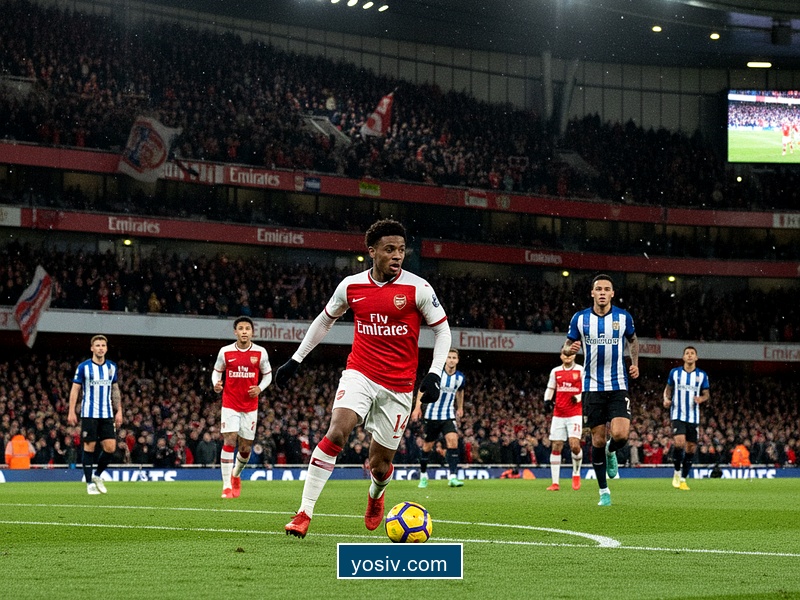
Mikel Arteta has constructed a machine designed for total control. It is a system predicated on geometric precision, where every blade of grass is accounted for and every passing lane is rehearsed. Yet, within this high-functioning automaton, a ghost in the machine exists. Theo Walcott, a man who sprinted the touchlines of the Emirates for over a decade, has identified a structural fracture in Arsenal's title charge. While the narrative focuses on "heart" or "bottle," the tactical reality is far colder: Arsenal suffers from a distinct lack of variable threat in the final phase of play.
Walcott’s assertion points toward a depth issue, but digging deeper into the data reveals a tactical rigidity. The "big problem" is not just the names on the bench; it is the inability of the system to generate high-quality chances when the primary "Plan A" (wing overload) is neutralized by a low block. We are witnessing a team that dominates territory but frequently lacks the killer instinct required to shatter defensive shells.
The Analysis: The Stagnation of the 3-2-5
To understand Walcott’s concern, we must dissect the offensive shape. In possession, Arsenal transitions from a 4-3-3 into a 3-2-5 or a 2-3-5. Ben White (or the acting right-back) inverts or overlaps, while Kai Havertz or Gabriel Jesus drops deep to link play. This creates a numerical overload in midfield, allowing Arsenal to camp in the opposition's half.
However, this structure relies heavily on the wingers—Bukayo Saka and Gabriel Martinelli—winning individual duels. Opposition managers have decoded this. By deploying a 5-4-1 defensive shape and doubling up on the wide men, they force Arsenal into a U-shaped circulation pattern. The ball moves from left to right, around the perimeter of the box, but rarely penetrates it. Without a focal point striker who occupies the center-backs physically, the opposition defensive line remains compact and unbothered.
The 'Facilitator' vs. The 'Finisher'
Walcott’s criticism implicitly targets the role of the Number 9 in Arteta’s system. Whether it is Jesus, Havertz, or Trossard, Arsenal utilizes a "facilitator" up front. Their heat maps show significant activity in the Zone 14 (the hole between midfield and defense) rather than the penalty area.
This creates a tactical paradox. The striker drops deep to create space, but because the wingers hold maximum width to stretch the pitch, no one exploits the space created centrally. Martin Odegaard arrives late, but he operates largely in the right half-space, looking for cutbacks rather than attacking the six-yard box.
| Player Profile | Primary Function | Tactical Drawback |
|---|---|---|
| Gabriel Jesus | Chaos / Dribbling / Linking | Vacates the box too often; low conversion rate. |
| Kai Havertz | Aerial Target / Space Creation | Lacks explosive pace to run in behind high lines. |
| Erling Haaland (City) | Pinning Defenders / Finishing | The benchmark Arsenal lacks. |
When a game is deadlocked at the 70th minute, this deficiency becomes fatal. Walcott notes the lack of options off the bench. This is not just about quality; it is about profile. Arsenal substitutes like-for-like. Trossard replaces Martinelli, but the tactical instruction remains identical: hold width, isolate the full-back, cut inside. There is no "Plan B" option—no physical target man to bypass the press with a long ball, and no pure poacher to scrap for loose balls in the box.
Defensive Transitions and the Risk Aversion
Another layer to this "problem" is the team's rest defense structure. Arteta requires his team to maintain a rigorous shape to prevent counter-attacks. This risk aversion stifles creativity. Players often opt for the safe recycling pass back to Saliba or Gabriel rather than attempting a risky through-ball that could lead to a turnover.
While this maintains control and results in the league's best defensive record, it hamstrings the attack when chasing a game. The bench players enter a system that discourages the very chaos needed to unsettle a disciplined defense. Walcott’s observation about the bench is astute because the substitutes are not permitted to break the tactical shackles. They function as fresh cogs in the same stalled engine.
The Solution: Verticality Over Control
Walcott’s diagnosis demands a shift in philosophy. To rectify the issue, Arsenal must reintroduce verticality. This involves two tactical adjustments. First, the midfielders (Rice or Merino) must make more third-man runs beyond the striker to disrupt the defensive line. Second, the substitutes must offer a contrasting profile to the starters.
The reliance on Saka is unsustainable. Opponents now triple-team him, knowing that if they stop the right wing, they stop Arsenal. The heat maps from recent fixtures confirm a lopsided attack, with the left side often serving merely as a decoy. A title-winning squad requires multidimensionality. If the "control" method fails, they need the "chaos" method. Currently, Arsenal possesses only the former.
Theo Walcott has highlighted the symptom: a lack of game-changers on the bench. But the disease is systemic. Until Arteta develops a mechanism to generate goals without total control, or recruits a forward who thrives on minimal touches but maximum impact, Arsenal will continue to find themselves hitting a glass ceiling against the Premier League's elite defensive units.