
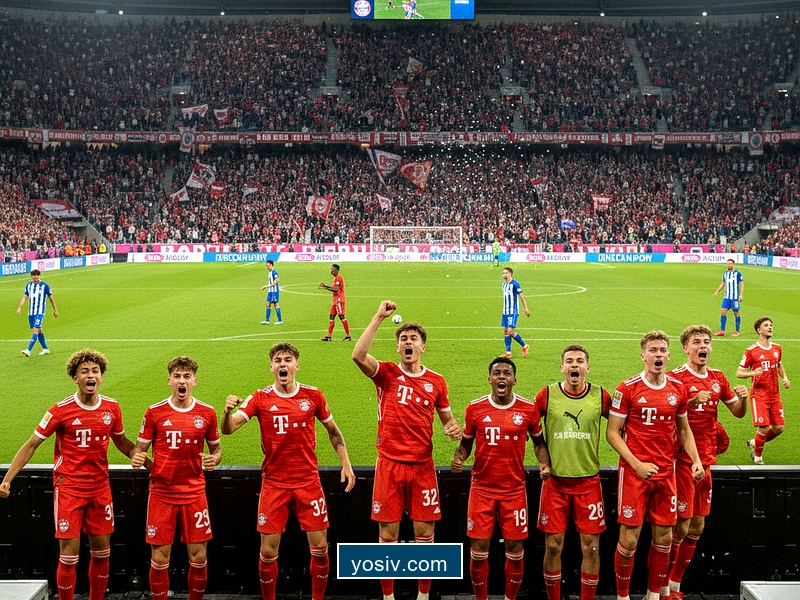
If you only glanced at the scoreboard, Bayern Munich’s 4-0 dismantling of Heidenheim looks like standard Bavarian efficiency. Another weekend, another rout, another Harry Kane masterclass. Move along, nothing to see here. But to view this result through the lens of the goalscorers is to miss the tectonic shifts occurring in the dugout. The real story wasn't the brilliance of the starting XI; it was the anonymity of the bench.
Vincent Kompany, a manager whose appointment was met with skepticism bordering on derision by the European elite, is currently conducting open-heart surgery on the club’s philosophy while the patient is still running a marathon. The bench against Heidenheim wasn't just "inexperienced" as the reports suggest; it was a manifesto.
The Death of the "Safety First" Bench
For the better part of a decade, Bayern Munich operated as a hoarding dragon. The bench was typically populated by internationals, frustrated superstars, and veterans earning GDP-sized wages to play fifteen minutes against Augsburg. That was the Hansi Flick model; that was the Thomas Tuchel security blanket. When things went wrong, you threw €80 million worth of talent at the problem until it went away.
Against Heidenheim, Kompany looked over his shoulder and saw children. With injuries decimating the squad, he didn't opt for a conservative setup to protect the youngsters. He didn't park the bus. He unleashed a system that demands absolute physical perfection and trusted teenagers to maintain it. This requires a level of tactical arrogance that is frankly breathtaking.
It is crucial to understand that this isn't merely about injuries forcing a manager's hand. We have seen Bayern managers in the past—specifically Niko Kovač—react to injury crises by playing midfielders at fullback and refusing to promote youth until the board intervened. Kompany is different. He views the Bayern Campus not as a last resort, but as the engine room of his high-pressing architecture.
The Eberl-Freund Doctrine
To understand why a 4-0 win over Heidenheim matters, you have to look upstairs to the executive boxes. Max Eberl and Christoph Freund were not brought in to maintain the status quo. The "FC Hollywood" era of signing galácticos for the sake of shirt sales is being actively dismantled, primarily due to the unsustainable wage bill that crippled the club's maneuverability in recent transfer windows.
Freund, the architect of the Red Bull Salzburg pipeline, and Eberl, the man who built Gladbach on savvy scouting, have aligned perfectly with Kompany. The strategy is clear: The first team must be leaner. The gaps must be filled by the Campus. This victory validates the board's massive gamble. When you see names like Adam Aznou or the integration of Nestory Irankunda into the matchday squads, you are seeing the "Salzburg-ification" of Munich. It is a high-risk strategy for a club where winning the league is the bare minimum requirement.
"We cannot just buy success anymore; we have to create it. The Campus cost us €70 million to build. It is time it started paying the rent." — Internal sentiment often echoed by Bayern hierarchy since 2020.
Tactical Necessity: Why Youth Works for Kompany
Why does Kompany trust the kids? Because his tactical system destroys legs. The Belgian has implemented a pressing structure that makes Julian Nagelsmann’s football look sedentary. Kompany demands a defensive line that sits on the halfway line and a counter-press that triggers within 1.5 seconds of losing possession.
Veterans in their 30s cannot sustain this for 50 games a season. We saw this burnout during the end of the Tuchel reign. By populating the bench with hungry, athletic academy graduates, Kompany isn't just saving money; he is injecting the necessary kinetic energy to maintain his system. Against a team like Heidenheim, who are physically robust and masters of the transition, having a bench that can match the running metrics is more valuable than having a technically superior but lethargic veteran.
The Historical Echo: Van Gaal 2.0?
There is a striking parallel here to the 2009/10 season under Louis van Gaal. That year, Van Gaal famously ignored the board's pleas to sign established stars and instead threw Thomas Müller and Holger Badstuber into the fire. He converted Bastian Schweinsteiger from a winger to a pivot. He was stubborn, abrasive, and fundamentally correct.
Kompany lacks Van Gaal’s abrasive personality, but he shares the Dutchman’s conviction. The integration of Aleksandar Pavlović (who, despite being a starter now, represents this new wave) and the reliance on the bench against Heidenheim suggests we are in the early stages of a similar generational cycle. The "Young and Restless" aren't just filling seats; they are being molded to replace the legends currently on the pitch.
The Sustainability Problem
However, let’s pour some cold water on the euphoria. Beating Heidenheim 4-0 with a thin squad is one thing; navigating a Champions League knockout tie against Real Madrid or Manchester City is another. The "Project" looks genius when the opposition allows you 70% possession. It looks naive when the pressure ramps up.
The danger for Bayern isn't losing a Bundesliga game; it's the physical and mental toll this places on the few senior players available. Harry Kane and Joshua Kimmich are playing enormous minutes. If the bench is exclusively "inexperienced," Kompany cannot rotate his leaders in high-stakes matches. He can only rotate the supporting cast.
| Era | Typical Bench Composition | Managerial Mindset |
|---|---|---|
| The Flick Era (2020) | World Cup Winners, €40m signings | Experience over everything. Win now. |
| The Nagelsmann Era (2022) | Tactical specialists, hybrids | System fit, regardless of age. |
| The Kompany Era (2024/25) | Campus Graduates, High-Potential U21s | Economic sustainability & High-energy pressing. |
The Verdict
The 4-0 victory over Heidenheim was a illusion of comfort. It masked a razor-thin margin of error that Bayern is currently walking. But for the first time in years, the club feels aligned. The manager, the sporting directors, and the academy are singing from the same hymn sheet.
Kompany is betting his reputation that he can coach raw talent into elite output faster than the rigorous schedule can break them. It is a race against time. If he succeeds, he hasn't just won a football match; he has solved Bayern’s identity crisis and saved them half a billion euros in transfer fees over the next five years. If he fails, he’ll be just another manager who tried to revolutionize Bavaria and was eaten by the sheer weight of expectation.
For now, the kids are alright. But winter is coming, and that inexperienced bench will need to be more than just enthusiastic participants—they will need to be match-winners.