
There is a specific, palpable pathology that comes with covering the Detroit Lions. It isn't merely the resignation of losing; every basement-dwelling franchise has that. It is the distinct, gnawing sensation that the officiating crew is not an impartial arbiter, but an active antagonist in the narrative. When Nate Burleson, a man who wore the Honolulu Blue during the difficult transition years of the early 2010s, went on air this week to claim that Lions players feel "scorned" and believe the "NFL has it out for them," he wasn't engaging in hyperbole. He was translating a decades-old dialect of Detroit pain.
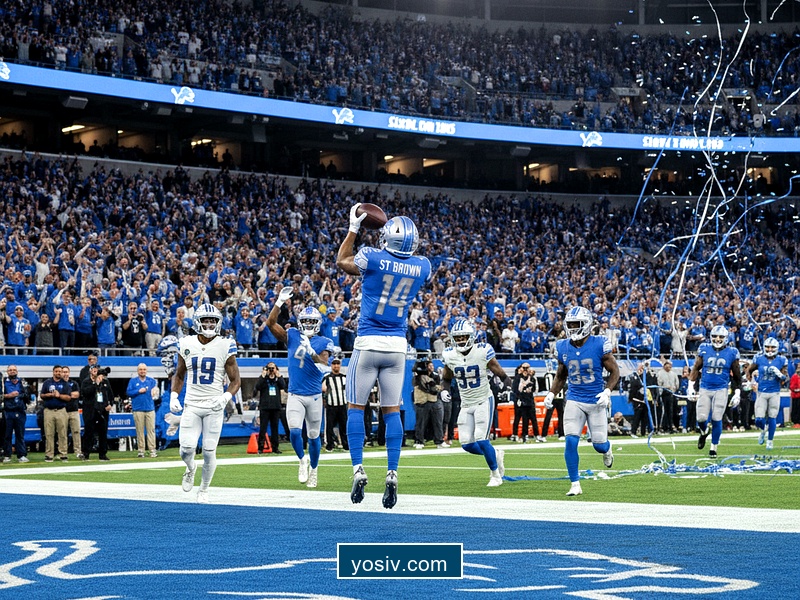
The recent debacle against the Pittsburgh Steelers, where an illegal formation penalty negated a pivotal Amon-Ra St. Brown touchdown, serves as the latest exhibit in a sprawling judicial case the city of Detroit has been building against the league office for twenty years. To the casual observer, it was a judgement call. To the veteran analyst, it was a ghost from the past, specifically the phantom calls of the 2014 Wild Card game, re-emerging to haunt a team that supposedly exorcised those demons.
The Anatomy of a Phantom Call: 2014 vs. 2024
To understand the fury surrounding the erased St. Brown touchdown, one must look beyond the box score. The source reports indicate ex-coaches and analysts are ripping the decision, but they fail to contextualize the historical weight. This wasn't just a flag; it was a repetition of the "Process of the Catch" trauma.
Compare this moment to the 2014 Wild Card game against the Dallas Cowboys. That afternoon, referee Pete Morelli announced a pass interference penalty on Anthony Hitchens, marched off the yardage, and then—in a move that remains statistically anomalous in NFL history—picked up the flag without explanation. That Lions team, led by Ndamukong Suh and Calvin Johnson, was physically superior but psychologically fragile. The reversal broke them.
The current Dan Campbell iteration of the Lions is built to be antifragile. They thrive on chaos. However, the "illegal formation" call against the Steelers strikes at a different nerve. It targets the technical precision of Ben Johnson’s offense. When you penalize a tackle for being inches off the line—a standard rarely enforced with such severity in the final two minutes—you aren't just enforcing rules; you are altering the fabric of the game.
"It’s not just about one play. It’s the accumulation of moments where the subjective nature of the rulebook seems to tilt strictly against one zip code. When Burleson says they feel scorned, he’s referencing a locker room culture that knows they have to beat the opponent by 10 points just to win by 1."
St. Brown and the Shadow of Hines Ward
Despite the officiating controversy, the "Stock Report" indicating 16 fallers suggests a team that let the officiating dictate their composure. However, Amon-Ra St. Brown remains the anomaly. In analyzing his performance against Joey Porter Jr., we are witnessing a modern reincarnation of a Steelers legend: Hines Ward.
Twenty years ago, Ward redefined the receiver position not by vertical speed, but by violent consistency and blocking leverage. St. Brown is the spiritual successor to that style. While Calvin Johnson was a mythological creature of size and speed, St. Brown is a tactical weapon. The negated touchdown highlights his ability to find soft spots in zone coverage, a skill Ward mastered during Pittsburgh’s Super Bowl XL run.
The difference, however, lies in protection. In the mid-2000s, the league protected its darlings. The Steelers of that era often benefited from the "benefit of the doubt" (see: Jerome Bettis vs. Seattle). St. Brown, despite being a top-tier talent, operates without that shield. He produces in spite of the environment, not because of it.
Tale of the Tape: The Grinders
| Attribute | Hines Ward (2004 Peak) | Amon-Ra St. Brown (2024) |
|---|---|---|
| Playing Style | Physical, blocking-first, middle of field | Precision route running, YAC, slot dominance |
| Relationship with Refs | Beneficiary of "The Steeler Way" aura | Subject to "The Lions Tax" scrutiny |
| Clutch Factor | Super Bowl MVP reliability | 3rd Down Conversion Machine |
| Defensive Attention | Safety help over top (Reed/Polamalu era) | Bracket coverage (Joey Porter Jr.) |
The Trenches: Where Myths Crumble
While the headlines focus on the officiating, the PFF grades for Cam Heyward reveal the uncomfortable truth about this loss. The Lions' offensive line, widely touted as the best in football since the days of the Chiefs' Will Shields and Willie Roaf, met its match. Cam Heyward is not merely a defensive tackle; he is a disruption engine reminiscent of Richard Seymour in his prime.
The "16 fallers" in the stock report likely reside heavily along the offensive front. For the last two years, Penei Sewell and Taylor Decker have masked deficiencies with athleticism. Against a 3-4 scheme anchored by a veteran like Heyward, the Lions' zone-blocking scheme was disrupted. This is tactical failure, not officiating bias. Heyward’s ability to two-gap and shed blockers forced the Lions into passing situations where the referees could intervene.
In the 2011 season, the Lions boasted a high-flying offense that couldn't run the ball or protect Matthew Stafford when it mattered. If this current squad allows 35-year-old defensive tackles to wreck their game plan, they risk regressing to that 2011 mean: entertaining, but soft in the middle.
The Danger of the "Detroit vs. Everybody" Mindset
Nate Burleson is correct that the players believe the league is against them. But as a columnist who watched the 1991 Lions squander Barry Sanders' prime and the 2014 Lions waste a championship-caliber defense, I argue that this mindset is a double-edged sword.
Dan Campbell has weaponized this paranoia. It fuels their grit. It makes them play hard. But against the Steelers, it made them lose focus. Great teams—the Brady Patriots, the Manning Colts—did not worry about the referees because their execution was so clinical that the margins for error were too wide for a flag to bridge. The Lions, for all their "Brand New" bravado, played a game close enough for a referee to decide it.
The late Amon-Ra touchdown should have counted. The holding calls were inconsistent. But the 2000 Baltimore Ravens didn't care about bad calls because they strangled you before the fourth quarter. If the Lions want to ascend from "fun story" to "dynasty," they must stop looking for flags and start looking at the scoreboard.
The Verdict
The NFL has an officiating crisis, exacerbated by a rulebook that has become a bloated legal document rather than a guide for play. Detroit is often the victim of this incompetence. However, the greats of the game—the Jerry Rices, the Ray Lewises—transcended the officiating. They didn't just beat the opposing 11; they beat the zebra stripes too.
The Steelers game was a reminder: The Lions have the talent of the 2014 squad and the grit of the 2004 Steelers, but until they develop the discipline of the 2016 Patriots, they will remain at the mercy of a yellow handkerchief. Paranoia may be justified, but in the NFL, it doesn't appear on the scoreboard.