
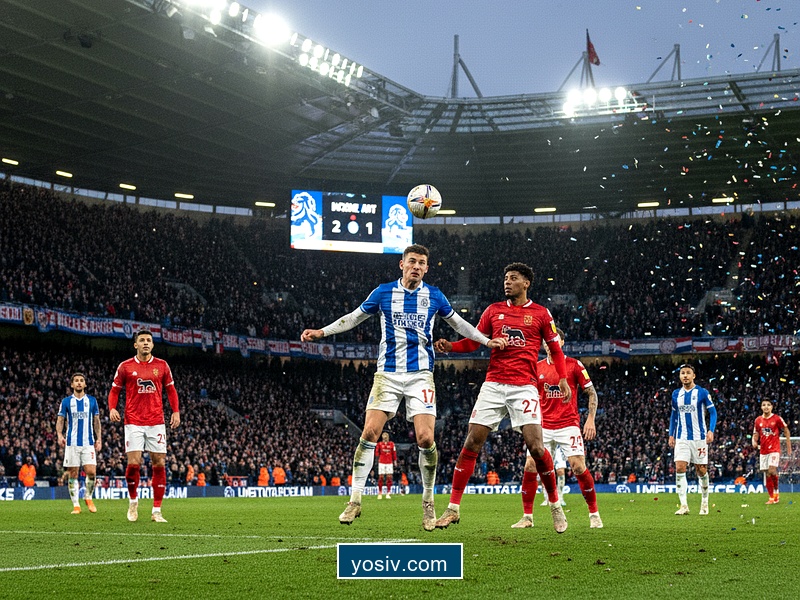
The news that tickets are simultaneously hitting the market for a grim Tuesday night excursion to Macclesfield and glitzy trips to Crystal Palace and West Ham United serves as a perfect microcosm of Sunderland AFC’s current existence. It is a club straddling two realities: the grit of their recent past and the Premier League ambition of their immediate future.
But to view this scramble for away allocations merely as fan loyalty is to miss the tectonic shifts occurring in the boardroom and on the training pitch. The rush for tickets isn't just about seeing a match; it is an endorsement of a specific, high-risk philosophical experiment. We are witnessing the most aggressive implementation of a "youth-first" model in modern English football, and these upcoming fixtures will serve as the ultimate stress test for a project that prioritizes process over pragmatism.
The Data-Driven Dogma
Under the stewardship of Kyril Dreyfus and sporting director Kristjaan Speakman, Sunderland has ceased to be a traditional football club and has morphed into a high-performance laboratory. The strategy is stark: recruit high-ceiling talent in the 18-22 age bracket, expose them to first-team rigours immediately, and rely on elite coaching to bridge the experience gap.
Historically, this is an inversion of the "Championship logic" established by managers like Neil Warnock or Mick McCarthy, who prioritized seasoned veterans to grind out 1-0 wins on cold nights in Stoke. Sunderland has rejected this. They have consistently fielded the youngest average starting XI in the EFL (often hovering around 22.4 years old). This is not an accident; it is a dogma.
The upcoming clash against West Ham, likely a cup tie or a high-stakes encounter given the context, presents a fascinating tactical dichotomy. West Ham, under managers like David Moyes or Julen Lopetegui, typically represent structure, physical maturity, and set-piece dominance. They are the "finished product." Sunderland’s philosophy, conversely, is built on volatility. The manager’s system relies on high-pressing triggers and rapid transitions—chaos engineering designed to unsettle superior opposition.
"We do not buy the finished article; we manufacture it in real-time, in front of 40,000 people." — The unspoken manifesto of the Stadium of Light.
Tactical Naivety or Modern Brilliance?
The philosophy demands a specific tactical setup that will be scrutinized in these away fixtures. The manager demands a high defensive line to compress the pitch, allowing the technical midfielders to suffocate opponents in their own half. This yields high possession stats and visually pleasing geometric passing triangles, but it carries a fatal flaw that experienced teams like Crystal Palace exploit mercilessly: the space in behind.
Looking at historical precedents, this mirrors the early stages of Marcelo Bielsa’s Leeds United or, more pertinently, the RB Leipzig model. The focus is on 'Verticality'—moving the ball forward as quickly as possible upon turnover. When it works, against teams like Macclesfield who may lack the tactical discipline to track runners, it looks like Total Football. When it fails, against Premier League caliber savvy possessed by West Ham, it can look like defensive suicide.
The metric to watch here is PPDA (Passes Allowed Per Defensive Action). Sunderland’s management demands a low PPDA, signifying intense pressing. However, sustaining this intensity over a 46-game season, plus cup runs involving top-tier opposition, usually leads to a physical drop-off in the final third of the campaign. The rotation policy for these specific fixtures will tell us if the manager is prioritizing the "Project" (league development) or the "Glory" (cup progression).
The Sustainability of the 'Project'
Is this sustainable? That is the question looming over the ticket office queues. A club cannot exist perpetually in a state of "potential." Eventually, potential must crystallize into points.
| The Boardroom Goal | The Manager's Reality | The Fan's Experience |
|---|---|---|
| Asset Appreciation (Player resale value) | Tactical inconsistency due to inexperience | High-octane entertainment vs. Defensive fragility |
| Long-term financial health | Need for immediate results to keep job | Patience vs. The demand for promotion |
The fixture against Macclesfield represents the "mud and nettles" reality. These are the games where technical superiority often vanishes on a heavy pitch, leveled by physical intimidation. If the manager’s philosophy is robust, it must be adaptable. A rigid adherence to "playing out from the back" against a low-block physical side is not a philosophy; it is vanity.
Conversely, the London trips to Palace and West Ham are free hits, but they are dangerous ones. A heavy defeat can shatter the fragile confidence of a young squad. We saw this historically with the heavy defeats suffered by Arsenal's "Project Youth" under Wenger in the late 2000s. When you strip a team of senior leadership to clear the wage bill, you remove the emotional shock absorbers required when things go wrong.
The Cognitive Dissonance of the Away End
Why, then, are the tickets selling out? Because the modern football fan has become sophisticated. The Sunderland faithful, perhaps more than any other demographic in England, understand that the "quick fix" managers (the Sam Allardyce firefighting era) left the club hollowed out and indebted. They are buying tickets for Macclesfield and West Ham not just for the 90 minutes, but because they have bought into the narrative of *rebuilding*.
However, the manager walks a tightrope. The "Project" provides a shield against criticism for a while—losses are explained away as "learning curves" for young players like Jobe Bellingham or Chris Rigg. But as the season matures, that shield thins. If the tactical setup remains naive—if we see the same gaps between the double-pivot midfield and the center-backs against West Ham that we saw in previous league failures—the mood will turn.
Verdict: The Process is the Point
The ticket sales for these disparate fixtures highlight the bizarre allure of English football. But look closer, and you see a referendum on the club’s identity. The manager is not just tasked with winning games; he is tasked with validating a business model. He must prove that you can bypass the traditional hierarchy of experience by substituting it with elite tactical periodization and youthful energy.
Winning at Macclesfield proves the team can fight. Competing at West Ham proves the team can play. Doing both in the same week would suggest that this high-wire act might actually get them to the other side. Until then, the fans travel in hope, funding a laboratory experiment that is as thrilling as it is precarious.