
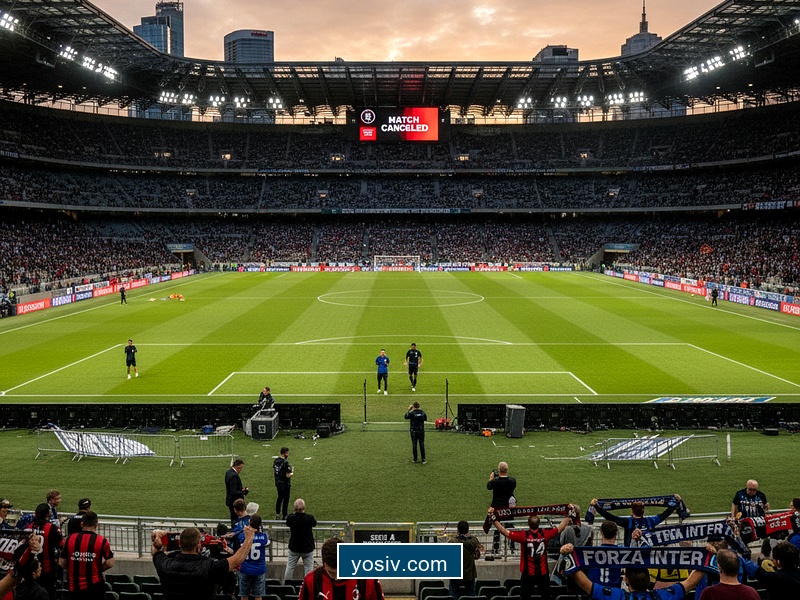
The sudden cancellation of the Serie A exhibition match in Australia is not merely a logistical failure; it is a merciful intervention for the sanctity of the sport. While promoters scramble to explain the "complications" and refund tickets to disappointed fans in Perth, the managers involved are likely breathing a sigh of relief in private. This botched tour serves as a perfect microcosm for the existential battle currently raging at the heart of Italy’s top clubs: the friction between the commercial "Project" and the tactical reality required to win football matches.
We need to look past the press release. This isn't about flight schedules or promoter insolvency. This is about the sustainability of a management model that treats football clubs as content production houses first and athletic institutions second. The result of this cancellation is a saved pre-season, but the intent behind booking it reveals a dangerous disconnect in modern Calcio.
The Myth of the Global Brand vs. The Reality of the Pitch
To understand why this cancellation matters, we must dissect the philosophy driving clubs like AC Milan and AS Roma under their respective American ownership groups (RedBird and The Friedkin Group). The "Project"—a term thrown around boardrooms with near-religious reverence—focuses on expanding the brand footprint. The logic is linear: play in Australia, capture the Asia-Pacific market, sell merchandise, increase enterprise value.
However, this mercantile philosophy is diametrically opposed to the tactical philosophy of a modern Serie A manager. Let us look at the tactical demands placed on these squads. Modern Italian football has moved away from the passive Catenaccio of the 90s into a high-octane, hybrid-pressing ecosystem. Managers today require precise physiological periodization. They need six weeks of controlled aerobic loading, tactical drilling of defensive shapes, and rest.
"You cannot build a high-pressing machine in an airport lounge. The modern Serie A tactician is an architect who needs a construction site, not a traveling circus."
When you force a squad to fly 26 hours round-trip for a friendly, you are not just tiring them out; you are actively dismantling the manager's tactical foundation. The cancellation of this match allows us to ask the uncomfortable question: Does the front office actually understand the sport they are selling?
Tactical Periodization: The Casualty of Commerce
Let’s analyze the "Manager’s Philosophy" that was at risk here. Whether we are discussing Daniele De Rossi’s desire for verticality or the complex positional rotations demanded by top-tier coaches like Paulo Fonseca or Simone Inzaghi, the requirement is the same: cognitive freshness.
In the Arrigo Sacchi era, Milanello was a laboratory. The success of the great Milan sides of the late 80s and early 90s was built on obsessive repetition of shadow play—eleven players moving in unison against an imaginary opponent. This created a collective hive mind. Today’s ownership groups seem to believe that chemistry can be bought or that tactical cohesion is a plug-and-play attribute.
Consider the "hybrid press" often utilized in Serie A. It requires a trigger man to initiate pressure, followed by the immediate collapse of the midfield line to cut off passing lanes. If the central midfielder is suffering from jet lag and reacts 0.5 seconds too late, the press is broken, the defensive line is exposed, and the system fails. The Australia tour would have generated revenue, but it would have eroded the very sharpness required to execute this philosophy.
The Disconnect: A Tale of Two Objectives
The table below illustrates the fundamental schism between the "Project" (Ownership) and the "Reality" (Management):
| Metric | The Ownership "Project" | The Manager's Reality |
|---|---|---|
| Primary Goal | Brand Ubiquity & Data Monetization | Clean Sheets & Expected Goals (xG) |
| View of "Friendlies" | Marketing Activation Event | Physiological Risk & Tactical Lab |
| Time Horizon | 5-10 Year ROI | The next 90 minutes |
| Ideal Player | Marketable, Social Media Savvy | Tactically Disciplined, Durable |
Sustainable for Whom?
The prompt asks if this result is sustainable. If we view the "result" as the current operational model of prioritizing exhibitions over preparation, the answer is a resounding no. We are witnessing a saturation point. Players are breaking down. ACL injuries are rising due to fixture congestion and lack of recovery time.
The collapse of the Australia match is a symptom of an overheated market. Promoters promise fees they cannot guarantee because the actual demand for a meaningless friendly—stripped of competitive tension—is lower than the spreadsheets suggest. Fans are sophisticated; they know when they are being served a diluted product by a B-team squad focused on avoiding injury.
Furthermore, the manager is left holding the bag. If the team starts the season slowly because they spent their preparation phase in an airplane, the manager gets sacked. The Chief Marketing Officer who booked the tour keeps their job. This creates a culture of short-termism in the dugout that prevents any true "philosophy" from taking root. You cannot implement a three-year tactical evolution if you are fired after six months because your players had heavy legs in September.
The Ghost of Calcio Past
There is a historical irony here. Serie A was once the wealthiest league in the world, the Il Campionato più bello del mondo. It achieved this status not by touring relentlessly, but by being the pinnacle of excellence on the pitch. The product sold itself. The grim determination of a Franco Baresi tackle or the artistry of a Roberto Baggio free-kick was the marketing.
Today’s owners are trying to reverse-engineer this. They want the fame of the 90s without the obsessive focus on footballing excellence that created it. They treat the club as IP (Intellectual Property) rather than a sporting entity. The cancellation of the Australian match is a glitch in their matrix, but for the football purist, it is a victory.
The Verdict
This logistical failure should serve as a wake-up call. A football club’s project cannot simply be "growth." The project must be winning. And winning requires respecting the physiological and tactical limits of the human beings on the pitch.
The manager’s philosophy—whether it is possession-based, counter-attacking, or high-pressing—relies on the sanctity of the training ground. Every day spent traveling for a commercial obligation is a day stolen from tactical instruction. If Serie A clubs want to return to the elite table of European football, they don't need more flights to Perth. They need more time at their own training centers, perfecting the geometry of the game that made them famous in the first place.
The Australian tour is dead. Long live the training session.